

What if your tenant wasn't a barrier to a successful sale, but the very asset that secures your property's premium valuation? Many landlords view the process of selling a tenanted property in Brampton with a sense of trepidation, fearing that legal complexities or tenant non-cooperation might stall their progress. It's a valid concern, especially when a contested N12 notice can lead to a Landlord and Tenant Board backlog of 7 to 10 months. However, with a sophisticated approach, you can navigate these challenges with grace, precision, and absolute confidence.
We understand that you value both prestige and progress in your real estate journey. This guide promises to help you master the legal nuances and strategic manoeuvres required to sell your property for its highest potential value while maintaining professional relationships. You'll learn to manage the delicate balance of N12 and N11 notices, ensure seamless showings, and protect your closing dates. We will examine how to transform a complex transaction into a significant life milestone by prioritizing clarity, substance, and regional expertise.
Key Takeaways
- Grasp the essential legal nuances of the Residential Tenancies Act, ensuring you distinguish between fixed-term and month-to-month arrangements with absolute precision.
- Master the complexities of selling a tenanted property in Brampton by implementing a strategic showing schedule that respects privacy while maximizing buyer interest.
- Identify the most lucrative target audience for your asset, weighing the benefits of a turn-key investment against the specific requirements of end-user buyers.
- Leverage refined communication strategies and mutual agreements to foster tenant cooperation, shielding your sale from potential Landlord and Tenant Board friction.
- Secure a flawless transition of ownership by meticulously documenting the transfer of security deposits and pro-rated rent within your Agreement of Purchase and Sale.
Navigating the Ontario Residential Tenancies Act in Brampton
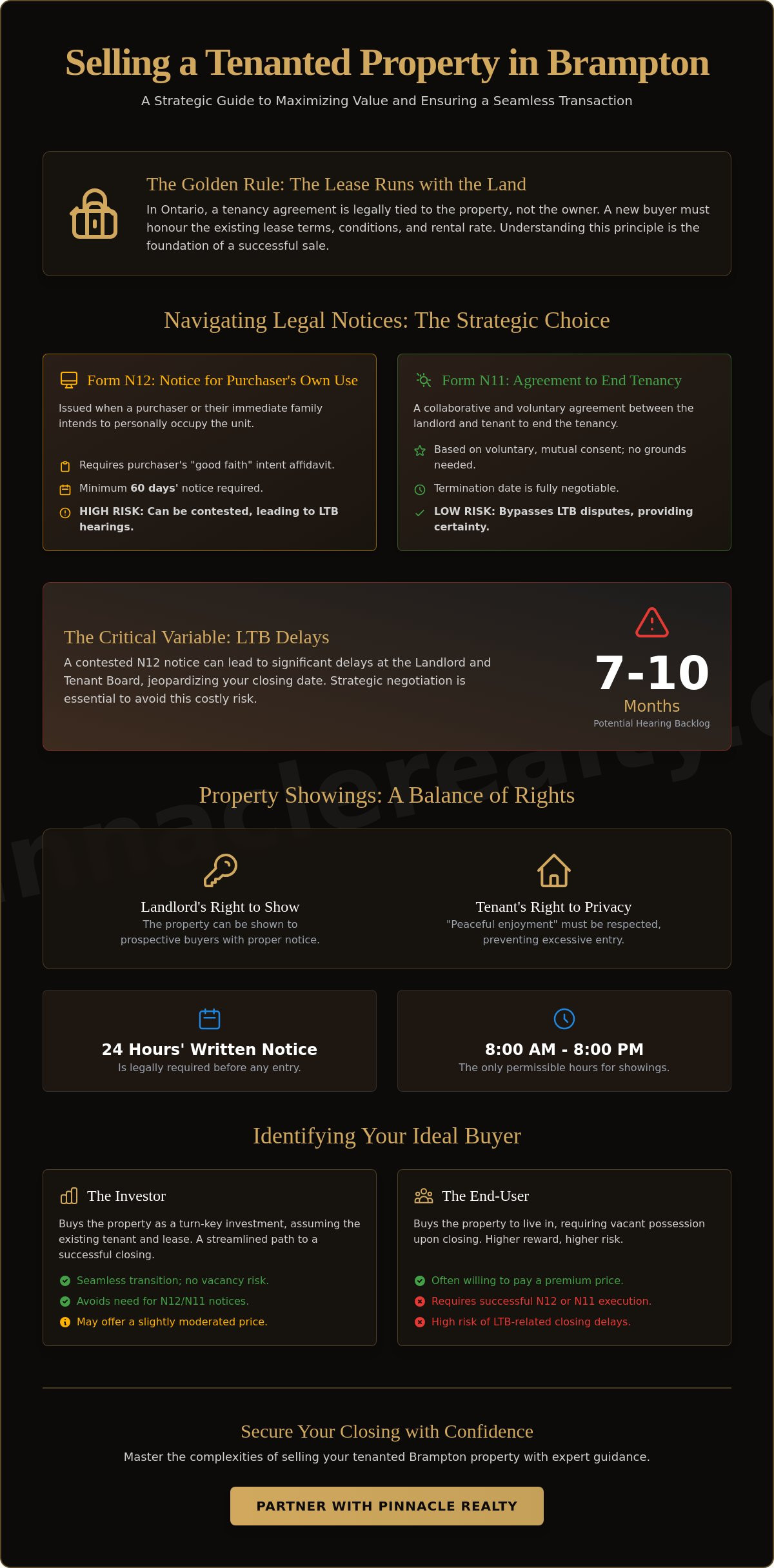
The process of selling a tenanted property in Brampton is governed by a complex framework that demands both legal precision and tactical foresight. In Ontario, a tenancy agreement is not merely a contract between two individuals; it is a legal obligation that "runs with the land." This means the lease survives the transfer of title, effectively binding the purchaser to the existing terms, conditions, and rental rates established by the previous owner. For the sophisticated landlord, understanding this continuity is the first step toward a successful exit strategy.
Vacant possession, while often desired by buyers, is not a guaranteed right for the seller under provincial law. Instead, it is a negotiated outcome that must align with the strict protocols of the Landlord and Tenant Board (LTB). Given the current administrative landscape in Brampton, where hearing delays can stretch between 7 to 10 months, navigating these regulations with absolute confidence is the only way to protect your investment's value. A well-timed sale requires a balance of architectural prominence, personal drive, and a deep respect for the local regulatory environment.
The Binding Nature of Ontario Leases
The Residential Tenancies Act (RTA) serves as the primary safeguard for tenants across the province, ensuring their housing remains secure even during a change in ownership. Unless a buyer intends to occupy the unit personally, they must assume the tenant under the original lease agreement. Attempting to terminate a tenancy simply to make a property more "marketable" can lead to significant legal repercussions and financial penalties. Success in this arena requires a discerning eye for detail, particularly when distinguishing between different rental structures.
- Fixed-term leases: These agreements offer tenants absolute protection until the expiry date, regardless of a sale.
- Month-to-month arrangements: These provide more flexibility for owner-occupation notices once the initial term has passed.
- Good-faith requirements: The LTB requires clear evidence that a purchaser truly intends to move in.
Key Legal Documents: N11 vs. N12 Notices
When selling a tenanted property in Brampton, the choice between an N11 and N12 notice can define the entire trajectory of your closing. The N11 form, or Agreement to End the Tenancy, functions as a collaborative tool; it allows both parties to mutually agree on a departure date. This approach values clarity over chaos, often involving incentives that ensure the property is presented in its best light during the marketing phase. It frames the move as a transition rather than a confrontation.
Conversely, the N12 notice is utilized when the landlord or purchaser requires the unit for their own residential use. To remain compliant, a landlord must provide the tenant with a minimum of 60 days' written notice, with the termination date falling on the last day of a rental period. This process demands meticulous timing and a commitment to professional excellence to ensure your closing remains on track and your reputation remains untarnished.
Balancing Property Showings with Tenant Privacy Rights
The successful sale of a tenanted home rests on a foundation of mutual respect and legal adherence. When selling a tenanted property in Brampton, the law is clear: landlords must provide at least 24 hours of written notice before any potential buyer enters the premises. These showings must occur within the strictly defined window of 8:00 AM to 8:00 PM. While you have the right to show the property, the tenant retains the right to "peaceful enjoyment," a legal standard that prevents excessive or disruptive entry. Balancing these competing interests requires a visionary approach that values clarity over conflict.
This process is most effective when handled with a refined, professional demeanour. By framing the sale as a shared transition, you can often secure the cooperation needed to maintain a high-paced showing schedule. If you are ever unsure of the specific boundaries, consulting A Guide to the Residential Tenancies Act can provide the necessary legal grounding to move forward with absolute confidence. Success here is about architectural prominence, personal drive, and meticulous navigation of the local landscape.
Standardizing the Entry Process
Efficiency, transparency, and consistency are the hallmarks of a sophisticated sale. To minimize friction, consider establishing predictable showing windows that allow the tenant to plan their day with certainty. Utilizing a professional real estate lockbox ensures secure, tracked access, providing peace of mind for both the owner and the occupant. Documentation is equally critical; keeping a meticulous record of every notice delivered protects you from potential legal disputes at the LTB. This structured approach mirrors the seamless service experience our clients expect, turning a complex process into a manageable milestone.
Photography and Virtual Tours
Visual appeal is a key differentiator in competitive metropolitan markets, yet photography in tenanted spaces presents unique hurdles. Tenants have a right to privacy regarding their personal belongings, which means you cannot always photograph every corner of their home without explicit consent. To maintain contemporary aesthetic standards, landlords must often rely on strategic angles or digital enhancements that respect the tenant’s boundaries while highlighting the property's potential. By leveraging Pinnacle Realty's digital media expertise, you can showcase the property's architectural prominence without infringing on the occupant's rights.
This modern technological approach ensures your listing stands out while upholding the highest professional standards. If you are ready to begin this transition, exploring our residential listing services can help you align your goals with current market realities and achieve the results you deserve.
Assessing Market Value: Tenanted vs. Vacant Possession
Determining the true market value of an occupied residence requires a discerning eye for both financial metrics and human variables. When selling a tenanted property in Brampton, you aren't just selling bricks and mortar; you're selling a legal arrangement and a potential lifestyle. The valuation often pivots on whether your property appeals more to the aspirational end-user or the success-oriented investor. While a vacant home offers a blank canvas for modern aesthetic standards, a tenanted property provides a structured financial narrative that can be equally compelling under the right conditions.
The "vacancy premium" is a frequent topic of discussion among landlords, with many realizing that a vacant possession can command a higher price from families seeking immediate occupancy. However, in the competitive Brampton market, high current rents can actually bolster the value of an asset for those prioritizing growth and stability. A cooperative tenant who maintains the property's architectural prominence and facilitates smooth showings can bridge the gap between these two price points. Success in this transition depends on clarity, substance, and regional expertise.
The Investor Perspective in the GTA
For the sophisticated investor, a tenanted property is often viewed as a "turn-key" masterpiece. A reliable, high-paying tenant eliminates the initial vacancy risk and the costs associated with finding new occupants. When marketing to this demographic, focus on the substance of the investment: Cap Rates, Return on Investment (ROI), and established cash flow. Brampton's robust rental market makes these assets highly desirable, provided the lease terms reflect contemporary market realities. Reviewing Renting in Ontario: your rights helps both parties understand the legal foundation of the cash flow they are acquiring.
- Established Revenue: Immediate income from day one of ownership.
- Vetted Occupancy: A proven track record of timely payments and property care.
- Operational Ease: No immediate need for marketing or tenant screening.
The End-User Challenge
The primary hurdle when selling to an end-user is the perceived lack of control. Many first-time buyers in Brampton, often looking to house multi-generational families, fear the uncertainty of a "holdover tenant" who refuses to vacate. This anxiety is not without merit, as it can disrupt move-in timelines and financial planning. A tenant's refusal to vacate can jeopardize a buyer's CMHC insurance eligibility, as the insurer requires the purchaser to occupy the property as their primary residence within a specific timeframe. To see how we position properties to overcome these challenges, explore our current residential listings. We focus on lifestyle alignment and meticulous navigation to ensure every transaction feels like a significant life milestone handled with grace.
Strategic Communication: Incentivizing Tenant Cooperation
Refining the dialogue between landlord and tenant is the cornerstone of a successful market exit. When selling a tenanted property in Brampton, your primary objective is to transform a potentially friction-filled transaction into a collaborative transition. This requires a visionary mindset that prioritizes long-term success over immediate cost-cutting. By viewing your tenant as a partner in the process, you can ensure the property maintains its architectural prominence and polished aesthetic throughout the listing period. Small gestures of goodwill, such as offering professional cleaning services or premium gift cards, act as catalysts for cooperation. These incentives ensure your home is always presented with grace and precision during high-stakes showings.
A sophisticated landlord understands that cooperation is earned through transparency and mutual benefit. Providing your tenant with a clear roadmap of the sales process instils a sense of absolute confidence and reduces the anxiety associated with life transitions. Whether it's rewarding them for maintaining a show-ready interior or offering flexibility with viewing times, these strategic manoeuvres protect your property's value. You aren't just managing a lease; you're orchestrating a milestone with a focus on clarity, substance, and regional expertise.
The Art of the N11 Negotiation
Approaching a tenant with a voluntary move-out agreement, often referred to as a "cash for keys" strategy, is a powerful tool for landlords seeking vacant possession. This negotiation should be handled with a refined and professional demeanour, framing the offer as a financial opportunity for the tenant to fund their own next chapter. A well-structured N11 agreement protects your ROI by avoiding the 7 to 10 month LTB backlog associated with contested notices. It's essential that every detail of this agreement is documented on the correct LTB forms to ensure legal finality and a seamless transition of ownership.
Maintaining Professionalism Throughout the Listing
Success in competitive metropolitan markets demands a high standard of communication. Keeping your tenant informed of the sale's progress through regular, respectful updates prevents the feeling of exclusion that often leads to non-cooperation. It's often beneficial to partner with a Brampton real estate agent who understands the delicate balance of tenant rights and seller goals. By managing expectations regarding the buyer's intent to occupy, you maintain a calm and composed environment that appeals to serious purchasers and protects your professional reputation.
If you're ready to elevate your real estate strategy and achieve a premium result, discover how our residential listing services can guide your property to its full market potential.
Transitioning Ownership: Closing the Sale with Pinnacle Realty
The final phase of selling a tenanted property in Brampton is a meticulous exercise in administrative precision and professional grace. As the transaction nears its conclusion, the focus shifts from marketing and negotiation to the seamless transfer of legal and financial obligations. A successful closing ensures that the Agreement of Purchase and Sale (APS) correctly reflects the status of the tenancy, protecting both your interests and your reputation. This stage is a significant life milestone, demanding a partner who values clarity, substance, and a polished aesthetic in every detail of the handover.
Financial accuracy at closing is non-negotiable. You must ensure the transfer of the tenant’s last month’s rent deposit, along with any accrued interest, to the purchaser. Rents for the month of closing are pro-rated to the day of completion, requiring a sharp eye for detail to avoid last-minute disputes. Beyond the ledger, the transition involves the physical handover of keys and the formal introduction of the new owner to the occupant. Handling these tasks with absolute confidence ensures the property’s architectural prominence is matched by a superior service experience.
Buyer's Intent and the N12 Notice
When a purchaser intends to occupy the residence personally, the seller assumes the responsibility of serving the N12 notice on the buyer's behalf. This process can only begin once a firm Agreement of Purchase and Sale is in place. To safeguard against legal friction, the buyer should provide a written affidavit or declaration confirming their good-faith intent to occupy the unit. It's vital to recognize that if a buyer does not reside in the property for at least one year after the tenant vacates, the seller may still face potential liabilities for a "bad faith" eviction. Navigating these risks requires a discerning guide who prioritizes long-term success over immediate results.
The Pinnacle Listing Advantage
Our residential listing services are designed to manage the unique complexities of tenanted assets with sophisticated ease. We understand that a tenanted home isn't a liability; it's a structured investment that requires a bespoke marketing approach. By leveraging our exclusive network of investors, we often find buyers who specifically value properties with established cash flow and reliable occupants. This strategic alignment minimizes disruption for your tenants while maximizing the asset’s value in Brampton’s competitive metropolitan market.
Success in real estate is defined by the quality of the transition and the growth it enables. Whether you are divesting a single condominium or a multi-unit residence, our team provides the visionary leadership needed to navigate the local landscape with precision. Start your next chapter by contacting our Brampton office for a confidential consultation. We are committed to handling your transaction as a significant milestone, ensuring every detail is managed with the grace and professionalism you deserve.
Mastering Your Real Estate Evolution
Navigating a sophisticated market exit requires a blend of legal acumen and relational finesse. By prioritizing transparency and leveraging strategic incentives, you ensure your property remains a highly desirable asset. A tenanted home isn't a hurdle; it's a structured investment that delivers significant value when handled with grace. Your commitment to professional excellence throughout this transition protects both your reputation and your ROI. This is about more than a sale; it's about orchestrating a milestone with absolute precision and visionary intent.
Selling a tenanted property in Brampton is a significant move that deserves a partner with local authority. We combine our deep expertise in the Residential Tenancies Act with an authoritative, investor-focused marketing approach to secure the results you desire. Discover how Pinnacle Realty elevates your Brampton property listing by aligning your high-end assets with contemporary goals. Your journey toward a successful closing is a path we're ready to navigate with confidence, clarity, and regional expertise. Your next chapter starts here.
Frequently Asked Questions
Can I evict a tenant in Brampton just because I want to sell my house?
No. The sale of a property isn't a legal ground for eviction in Ontario. The lease agreement remains binding and transfers to the new owner upon closing. You can only end the tenancy if the purchaser or their immediate family intends to move into the unit personally, which requires specific legal notices and adherence to the Residential Tenancies Act.
How much notice must I give a tenant for a real estate showing in Ontario?
You must provide at least 24 hours of written notice before any showing occurs. These viewings are legally permitted only between 8:00 AM and 8:00 PM. Maintaining this standard reflects a commitment to professional excellence and ensures the tenant’s right to peaceful enjoyment is respected throughout the listing period.
What happens if a tenant refuses to leave after the house is sold?
If a tenant refuses to vacate, you must apply to the Landlord and Tenant Board (LTB) for an eviction order. This process can be lengthy, with current backlogs often resulting in delays of 7 to 10 months for a hearing. Many landlords utilize mutual agreements to avoid these complications and protect their closing timelines.
Does the tenant have to clean the house before a showing?
Tenants are only responsible for maintaining "ordinary cleanliness" as defined by provincial standards. They aren't legally required to stage the property or perform deep cleaning for your marketing efforts. Offering professional cleaning services is a sophisticated way to ensure the home’s architectural prominence is showcased while maintaining a positive relationship with the occupant.
Can a tenant stay in the house if the new buyer wants to live there?
A tenant can remain until the end of their fixed-term lease, even if an N12 notice is served. If the tenancy is month-to-month, the tenant must be given 60 days' notice to vacate for the buyer’s personal use. This transition requires meticulous navigation to ensure all legal dates align with the Agreement of Purchase and Sale.
What is a 'cash for keys' agreement and is it legal in Brampton?
A "cash for keys" agreement is a legal, mutual arrangement where a tenant agrees to vacate the property in exchange for financial compensation. This is officially documented using the N11 form. It's a strategic manoeuvre often employed when selling a tenanted property in Brampton to ensure vacant possession and a seamless transition for the buyer.
Do I have to pay the tenant compensation if I sell the property?
Yes, if you serve an N12 notice because the buyer intends to occupy the unit, you're required to pay the tenant one month's rent as compensation. This payment must be made on or before the termination date listed in the notice. Failing to provide this compensation can result in the LTB dismissing your application for eviction.
Can I take photos of the property for the listing if the tenant's furniture is there?
You may take photographs for marketing purposes, but you must be careful not to infringe on the tenant’s privacy rights regarding their personal belongings. A detail-oriented approach that focuses on the property’s contemporary aesthetic while respecting the tenant's space is essential. Obtaining written consent for the specific use of these images is always a professional best practice.


