

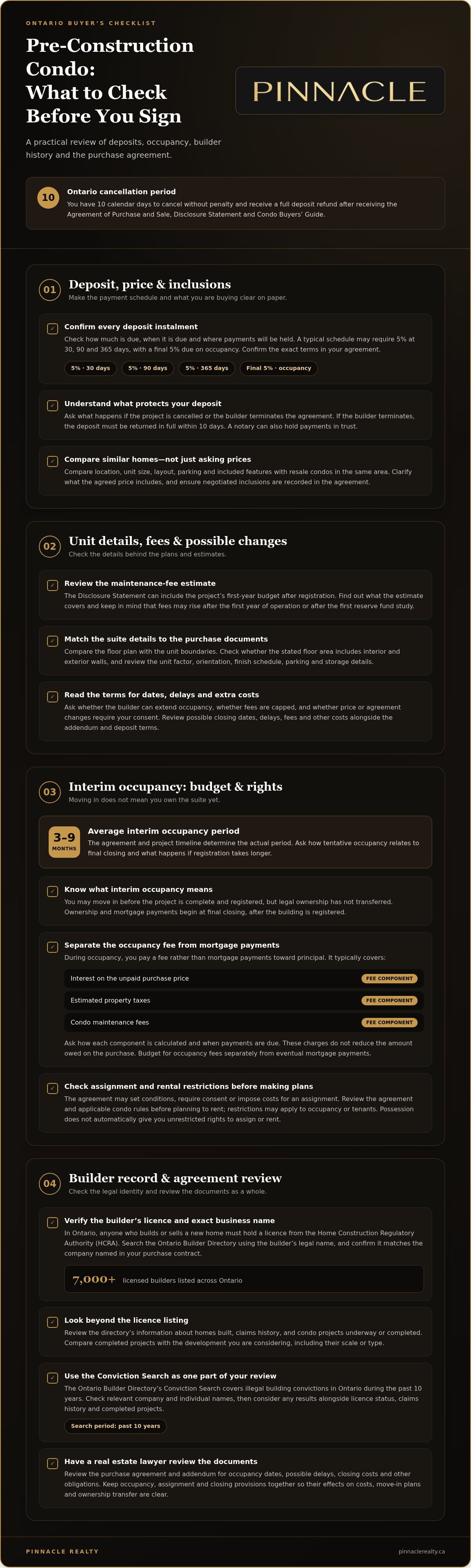
In Ontario, buyers have 10 calendar days to cancel a pre-construction condo purchase agreement without penalty and receive a full deposit refund. The period starts after they receive the Agreement of Purchase and Sale, Disclosure Statement and Condo Buyers’ Guide. The most useful questions to ask before buying a pre-construction condo focus on interim occupancy, possible changes to dates and costs, and the obligations set out in the agreement.
Interim occupancy can let you move into your suite before you legally own it. During this period, fees typically cover interest on the unpaid purchase price, estimated property taxes and condo maintenance fees. A careful review of the purchase agreement by a real estate lawyer can help you understand the occupancy dates, possible delays and closing costs. Here are key questions to ask about the occupancy period, the builder’s record and the agreement before you commit.
Key Takeaways
- Before planning to assign or rent your unit during interim occupancy, look closely at what the purchase agreement allows and what conditions apply.
- Check that the builder is licensed with Ontario’s Home Construction Regulatory Authority, then review its building, claims and project history.
- Have a real estate lawyer review the agreement’s key terms, including the addendum, closing costs and Condominium Information Sheet.
1. Pre-Construction Buyer Questions?
Start with the deposit: how much is due, when, and where will payments be held? A typical schedule may require 5% at 30, 90 and 365 days, with a final 5% due on occupancy. Use questions to ask before buying a pre-construction condo to organize the details: confirm each instalment, the total deposit and the payment terms in the agreement.
Ask what protects your deposit if the project is cancelled or the builder terminates the agreement. In Ontario, buyers have 10 calendar days to cancel after receiving the Agreement of Purchase and Sale, Disclosure Statement and Condo Buyers’ Guide, with a full deposit refund. If the builder terminates, the deposit must be returned in full within 10 days. A notary can also hold payments in trust.
How do pre-construction condo prices compare with resale condos in the same area? Compare similar locations, unit sizes, layouts, parking and included features rather than relying on price alone. Among the questions to ask before buying a pre-construction condo, clarify which items are included in the agreed price and ensure any negotiated inclusions are recorded in the agreement.
How are maintenance fees estimated before construction? The project’s disclosure statement can include its first-year budget after registration, which helps explain the estimate. Fees may rise after the first year of operation or after the first reserve fund study, so understand what the estimate covers.
How can you assess the floor plan, orientation, finishes, parking and storage before buying? Compare the plan with the unit boundaries, check whether the stated floor area includes interior and exterior walls, and review the unit factor. Confirm the orientation, finish schedule, parking and storage details in the purchase documents.
Finally, what can change before closing? Review the purchase agreement carefully for closing dates, possible delays, fees and other costs. Ask whether the builder can extend occupancy, whether fees are capped, and whether changes to the price or agreement require your consent. Review the addendum alongside the deposit and closing terms.
2. What is “interim occupancy” and how does it work?
In Ontario, interim occupancy is the period when buyers can move into their condo before the project is complete and registered. They can live in the unit, but ownership has not transferred. Legal ownership and mortgage payments begin at final closing, after the building is registered.
During this period, buyers pay an occupancy fee rather than mortgage payments toward principal. The fee typically covers interest on the unpaid purchase price, estimated property taxes and condo maintenance fees. Ask how each component is calculated, when payments are due and how the agreement describes the fee. These charges don’t reduce the amount owed on the purchase.
The interim occupancy period averages 3 to 9 months for a pre-construction condo, although the agreement and project timeline shape the actual period. Ask how the tentative occupancy date relates to final closing, what happens if registration takes longer, and which costs continue until closing. Build the occupancy fee into your budget separately from your eventual mortgage payments.
Planning to assign the unit or rent it during interim occupancy? Read the agreement’s assignment terms before making plans. It may set conditions, require consent or impose costs for an assignment. Renting also requires careful review of the agreement and applicable condo rules, including any restrictions on occupancy or tenants. Don’t assume that taking possession gives you unrestricted rights to transfer or rent the unit.
For a clear picture, compare the agreement’s occupancy, assignment and closing provisions together. Ask who pays the occupancy fee if an assignment is proposed, whether the new purchaser can take over the agreement, and what steps must happen before final closing. Keep the relevant dates and payment terms in one timeline. This makes it easier to see how interim occupancy affects your cash flow, move-in plans and the eventual transfer of ownership.
3. Checking a builder’s licence and history
In Ontario, anyone who builds or sells a new home must hold a licence from the Home Construction Regulatory Authority (HCRA). Before signing, search the Ontario Builder Directory using the builder’s legal name. Confirm the listing matches the company named in your purchase contract, not simply a similar brand or project name. The directory lists more than 7,000 licensed builders across Ontario, so checking the exact business identity matters.
Then look beyond the licence. The directory provides information about a builder’s homes built, claims history, and condominium projects underway or completed. Compare the builder’s completed condo projects with the development you’re considering. Look for a consistent record across the company’s portfolio, and note whether the current project differs in scale or type from its past work. A long project list alone doesn’t explain the details of each development.
Use the Ontario Builder Directory’s Conviction Search to see whether a company or individual has been associated with illegal building convictions in Ontario during the past 10 years. Check the relevant names carefully, including the business identified in your contract. Treat the search as one part of your review, alongside licence status, claims history and completed projects. A result is most useful when considered in context rather than as a substitute for reading the purchase documents.
Before committing, make a short record of what you reviewed: the licence listing, the directory’s claims and project information, and any conviction-search results. Compare the builder named in those records with the vendor named in the contract. If different legal entities appear, note how the agreement connects them to the project. This keeps the builder review specific and gives you a clearer basis for discussing the development and its history before signing.
4. Having a real estate lawyer review the purchase agreement
An Ontario pre-construction purchase agreement is a legal, binding contract between the purchaser and vendor. Have a real estate lawyer review it before signing, while there’s still time to understand the obligations and raise concerns. A sales presentation or floor plan can’t replace the written terms. The agreement, addenda and disclosure documents together shape what you’re buying and what the developer must deliver.
Ask your lawyer to explain the clauses that affect the purchase in practical terms. Start with the unit description, boundaries, floor area, parking and storage. Then review deposits, closing adjustments, occupancy dates, delay provisions, termination rights and assignment conditions. If a sales representative discussed an inclusion or feature, compare that promise with the agreement and schedules. A detail that isn’t written into the purchase documents may not be part of the contractual commitment.
Ontario pre-construction condo purchase agreements must include a Condominium Information Sheet. Review it alongside the Disclosure Statement and Condo Buyers’ Guide, and ask how each document relates to the contract. The agreement’s addendum addresses closing dates, potential delays, closing fees and other possible costs. Focus on how those provisions interact: a date in one document may be qualified by terms elsewhere. Ask the lawyer to identify those connections and explain how they affect your responsibilities.
Use the review to resolve specific uncertainties before signing, not simply to collect a summary after the fact. Give the lawyer the full document package, including every schedule and amendment, and ask which terms need clarification or negotiation. Confirm that changes appear in the final written agreement before you sign. Ontario law gives buyers a cancellation period after receiving the required documents, but that window is not a substitute for understanding the contract in advance. The takeaway is clear: make legal review part of your purchase process, and sign only after you understand the agreement’s key dates, costs and obligations.
Pinnacle Realty: Residential Listing Services
Pinnacle Realty supports buyers moving from research to a purchase through Buyer Agency Services, Condominium Sales and Pre-Construction Property Sales. Turn to its team when you’re comparing developments, considering a unit or preparing to make an offer, and want real estate representation through the buying process. For homeowners planning a sale alongside a move, Residential Listing Services can support that transition too.
Bring your priorities into the conversation: preferred location, intended use, important unit features and the purchase terms you want to understand. Clear goals help focus the search and keep the next steps aligned with your plans. Contact Pinnacle Realty or visit pinnaclerealty.ca to discuss your next move.
Make your next move with clarity
A pre-construction purchase is also a decision about how you want to live in the years ahead. Consider how the unit could suit your daily routines, changing priorities and plans for the property. The right choice should make sense beyond the excitement of a new building. Give yourself room to weigh the details, identify what matters most and move forward deliberately.
The questions to ask before buying a pre-construction condo can turn a complex decision into a clearer set of priorities. Use those priorities to guide your next steps, whether you’re still exploring or preparing to choose a home. A thoughtful conversation can help you focus on what you’re looking for and the type of move you want to make.
Start a conversation with Pinnacle Realty and take your next step with confidence.
Frequently Asked Questions
What is “interim occupancy” and how does it work?
In Ontario, interim occupancy is the period after a unit becomes available to occupy but before final closing transfers ownership. Your carrying costs during this gap differ from mortgage payments, so build a separate cash-flow plan. For example, map expected occupancy charges against move-in expenses, then keep final-closing funds distinct. Review the agreement’s occupancy provisions before setting a firm move date.
How many units must the developer sell to obtain financing?
Financial institutions typically require at least 50% of a condominium project’s units to be sold before providing a construction loan. This figure refers to the project’s sales threshold for financing, not a promise that construction or occupancy will proceed on a particular schedule. For a Brampton development, ask how the project’s financing conditions relate to its stated timelines and the agreement’s termination terms.
How is the payment to the sponsor protected, and who is responsible for this protection?
A notary can also hold pre-construction payments in trust. These are distinct arrangements: ask which protection applies to your deposit, who holds each payment and what conditions govern its return. The agreement should identify the payment process and the parties’ responsibilities.
Can I cancel the purchase agreement after signing?
Yes. In Ontario, buyers can cancel without penalty and receive a full deposit refund within 10 calendar days after receiving the Agreement of Purchase and Sale, Disclosure Statement and Condo Buyers’ Guide. Keep a record of when you receive all three documents so you can track the applicable period. Read the agreement for the required cancellation method and delivery details, and act within the window.
Is my deposit safe?
Deposit protection exists, but don’t assume every dollar is covered in every circumstance. Before paying, identify the payment recipient, how funds are held and what protection applies to your agreement. Match each instalment to the written payment schedule.
What should I prioritize before buying a pre-construction condo?
Prioritize the details that shape your day-to-day life and the full purchase commitment. For a Brampton project, compare the unit’s location and layout with your travel needs, planned use and preferred amenities. Then make sure the written documents align with your expectations for finishes, parking, storage and timing. A clear priority list helps separate essential features from appealing extras.


