

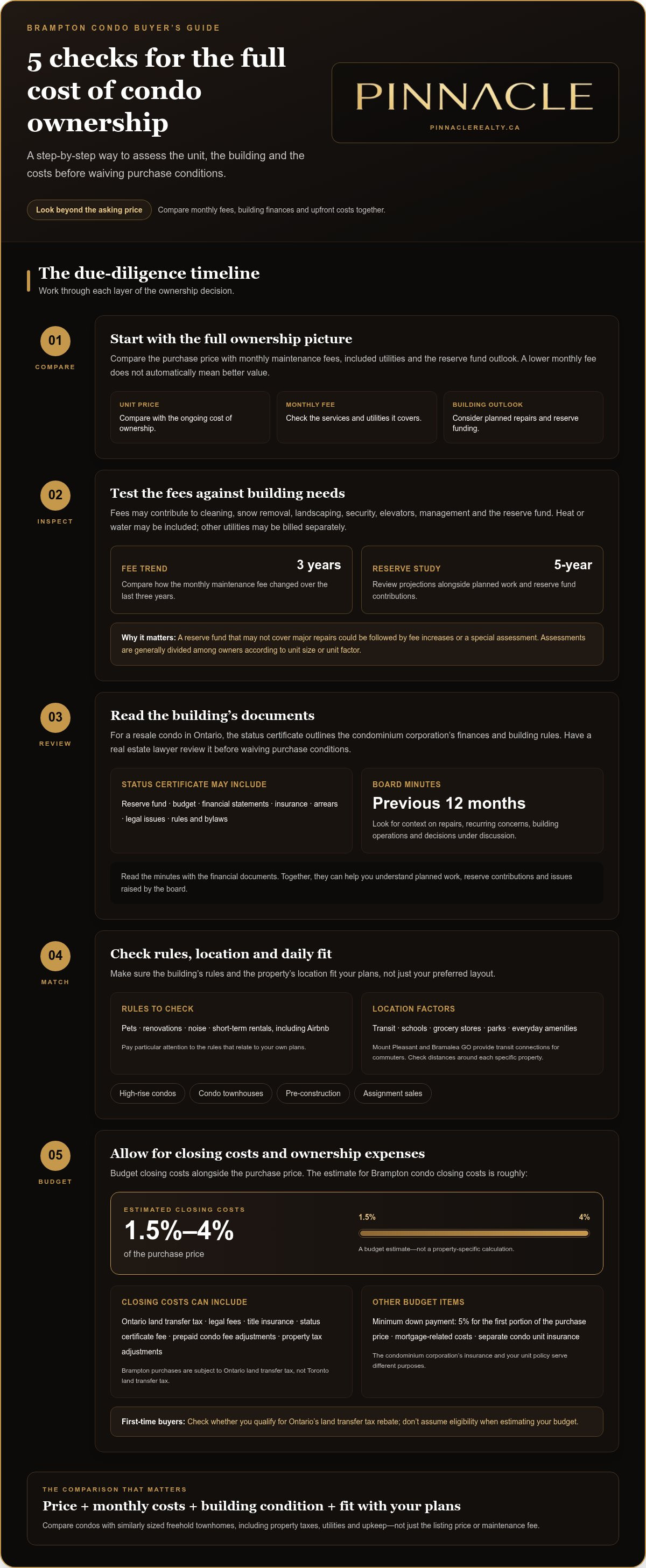
The lowest asking price can hide the bigger ownership cost. Knowing what to look for when buying a condo in Brampton means comparing the purchase price with monthly maintenance fees, what those fees cover, and the building’s reserve fund. Brampton condo closing costs are estimated at roughly 1.5 to 4 per cent of the purchase price, so they belong in your budget from the start.
It’s easy to focus on the unit itself, especially when buying your first home or simplifying your living arrangements. But a sound choice also depends on whether the layout suits your life, what utilities and services are included, and whether the building’s rules fit your plans.
This guide explains what to look for when buying a condo in Brampton, from the full cost of ownership and building finances to location and condo type. Compare high-rise condos, condo townhouses, pre-construction properties and assignment sales to find an option that fits your budget and plans.
Key Takeaways
- Compare condo fees by what they cover and the building’s reserve fund, not by the monthly amount alone.
- Use the status certificate and recent board minutes to understand the corporation’s finances, rules and planned repairs.
- Budget for closing costs alongside the purchase price, and see whether you qualify for Ontario’s first-time homebuyer land transfer tax rebate.
- Compare high-rise, townhouse, pre-construction and assignment options by their ownership structure, timing and fit with your plans.
What matters more: condo price or condo fee?
Compare the purchase price with monthly fees and the services those fees cover.
Building Maintenance and Management
Building maintenance and management cover shared services, repairs and the care of common areas. Condo fees may fund cleaning, snow removal, landscaping, security, elevators, management and reserve fund contributions. The details vary by building, so compare what each fee covers rather than assuming the lowest fee offers the best value. Heat or water may be included, while other utilities may be billed separately.
Consider what the fee pays for, not just the amount. A building with elevators, underground parking and landscaped grounds has shared spaces that need ongoing care. Compare fees with those of similarly sized freehold townhomes, too. When purchase prices are close, fees can affect which option costs less over time.
Reserve Funds and Fee Trends
A reserve fund sets aside money for major repairs and replacements in shared parts of the building. Review the reserve fund study’s five-year projections alongside planned work. A low monthly fee is less reassuring if the fund may not cover major repairs, which could lead to fee increases or a special assessment billed to owners.
Compare how the monthly maintenance fee changed over the last three years and whether that pattern fits the building’s repair plans. Special assessments are generally divided among owners according to unit size or unit factor.
For a clearer comparison, weigh the unit price, monthly fee, included utilities and reserve fund outlook together. That’s what to look for when buying a condo in Brampton: the full cost picture, not just one figure. A fee that supports sound maintenance and realistic planning may offer better value than a lower fee that leaves major work unfunded.
Why Buy a Condo in Brampton?
Mount Pleasant and Bramalea GO provide transit connections for commuters. Mount Pleasant, Bram West and Credit Valley are associated with schools, highway access and newer construction. Check each property’s distance to grocery stores, parks and everyday amenities, since convenience depends on its specific location.
For a resale condo in Ontario, the buyer receives a status certificate. This package outlines the condominium corporation’s finances and the rules governing the building. Have a real estate lawyer review it before waiving purchase conditions.
Review the Status Certificate Package
Read the status certificate as a snapshot of the condominium corporation, not just a formality. It may include the reserve fund, budget, financial statements, insurance, arrears, legal issues, rules and bylaws. These details help you understand the building’s finances and restrictions, including rules on pets, renovations, noise and short-term rentals such as Airbnb.
Relate the documents to your plans. If you intend to rent the unit, pay particular attention to rental restrictions. If you plan renovations, review the relevant bylaws; if you have a pet, understand the building’s pet rules. A lawyer can explain how these terms may affect your purchase.
Read Board Minutes Before Committing
Review the previous twelve months of condo board meeting minutes alongside the status certificate. Minutes can provide context on repairs, recurring concerns, building operations and decisions under discussion. Read them with the financial documents so you can consider planned work and reserve fund contributions together.
Newer, high-density communities also warrant a close look at reserve contributions and management history. Review the condominium documents before waiving purchase conditions. This gives you time to understand the corporation’s finances, the building’s rules and the issues raised by its board.
To compare neighbourhood context with current options, browse Brampton property listings and assess transit, schools, grocery access and parks around each property.
Condo closing costs and land transfer tax rebates
Condo buyers in Brampton should budget roughly 1.5 to 4 per cent of the purchase price for closing costs. These can include Ontario land transfer tax, legal fees, title insurance, the status certificate fee, and adjustments for prepaid condo fees or property taxes. Brampton purchases are subject to Ontario land transfer tax, not Toronto land transfer tax.
Financing also needs room in the budget: the stated minimum down payment is 5 per cent for the first portion of the purchase price. Include mortgage-related costs and separate condo unit insurance alongside closing expenses. The condominium corporation’s insurance and your own unit policy serve different purposes, so account for both in your ownership plan.
Allow for Tax and Closing Adjustments
Property tax adjustments settle amounts the seller has paid for the period after closing. Prepaid condo fees may also be adjusted between buyer and seller. These calculations depend on the closing date and amounts paid, so include them when estimating the cash needed to complete the purchase.
First-time homebuyers should check whether they qualify for an Ontario land transfer tax rebate. Build eligibility into your budget rather than assuming the rebate applies. Legal fees, title insurance and the status certificate fee are separate costs to account for.
Compare the Full Ownership Cost
Compare a condo with a similarly sized freehold townhome, not just another condo listing. If purchase prices are close, monthly maintenance fees may shift the overall cost comparison. Include property taxes, utilities and upkeep for both options, then consider how transit access affects your daily commute and location priorities.
Brampton properties typically cost less than comparable properties in Mississauga, although the gap is narrowing as Brampton infrastructure improves. That broad comparison doesn’t replace a property-by-property budget. A condo near transit may suit your routine, while the final cost picture depends on its purchase price, fees, taxes and closing adjustments.
Condo types, including high-rise, townhouse, pre-construction, and assignment sales
Brampton offers several condo formats, so compare the property type with your budget, daily routine and preferred move-in timing. High-rise units, condo townhouses, new builds and assignment sales each offer a different ownership experience.
A resale condo lets you assess an existing home and its layout before buying. With a new-build condo, you purchase before completion, so your decision relies more on plans, specifications and the proposed timeline. When deciding what to look for when buying a condo in Brampton, consider whether you want to see the finished unit now or commit to a future home.
High-rise condos can suit buyers seeking apartment-style living, while condo townhouses offer a different layout and access arrangement. Bramalea GO is another transit reference point if commuting convenience matters.
Pre-construction options also vary in price. Compare the home’s configuration, location and timing, not just its label.
An assignment sale involves buying the seller’s interest in a pre-construction purchase before the home is completed. It differs from buying a completed resale unit, so review the agreement and expected timing closely. The right fit depends on your budget, readiness to move and comfort with a home that may not yet be built.
Compare Brampton condo listings by property type, layout and location to narrow your real estate search.
Pinnacle Realty: Residential Listing Services
Pinnacle Realty supports condo buyers through Buyer Agency Services and Condominium Sales, whether you’re comparing resale units or narrowing down a preferred condo type. For a pre-construction purchase, its Pre-Construction Property Sales service can guide your search. If you’re preparing to sell before buying, Residential Listing Services can help with that part of the transition.
When you’re ready to move from comparing options to considering a purchase or sale, contact Pinnacle Realty. Visit pinnaclerealty.ca to discuss your next step.
Make your next move with clarity
Turn broad preferences into clear priorities. Decide which trade-offs suit your routine: more space or a central location, a completed home or a future move-in, shared amenities or greater independence. This makes it easier to compare properties based on how well they fit your life, not just how they look during a viewing.
To clarify what to look for when buying a condo in Brampton, write down your must-haves before reviewing more listings. Stay flexible about features you’d enjoy but don’t need. If your plans change, revisit those priorities before making an offer.
Pinnacle Realty offers Buyer Agency Services and Condominium Sales for buyers considering their next condo, along with Residential Listing Services for owners preparing to sell as part of a move. Contact Pinnacle Realty about condos to discuss your next step. A thoughtful decision today can set the foundation for a home that feels right well beyond move-in day.
Frequently Asked Questions
How can I tell if condo fees will rise quickly?
Look for signs that the condo corporation’s budget may not keep pace with expected costs. Compare fee history with planned repairs, operating expenses and reserve contributions. If expenses are rising while contributions remain flat, future increases may become more likely. Meeting minutes can flag discussions about rising costs or deferred work. Assess the whole pattern, not a single year’s fee change.
How do I avoid special assessment risk as a buyer?
You can’t eliminate every risk, but you can investigate how planned work will be funded. Compare major projects discussed in board minutes with the corporation’s budget and reserve planning. Note repeated delays, unresolved repair concerns and costs assigned to owners. A lawyer’s review of the condominium documents can help identify obligations or concerns before you commit.
Is Brampton a good place to buy a first home?
Brampton may suit first-time buyers looking for a lower purchase price than many detached homes, while condo living can mean fewer maintenance responsibilities. Whether it fits depends on your commute, household needs and comfort with shared rules and costs. Think beyond the purchase: consider how your routine may change and whether the unit’s layout and location will still work as your plans evolve.
Is a newer condo always safer than an older condo?
No. A newer building may have less wear, but age alone doesn’t establish financial health or construction quality. Newer, high-density communities still warrant a careful review of reserve contributions, management history and condominium documents. For an older building, repair records and completed upgrades can provide useful context. Assess the evidence for the specific building rather than treating its construction date as a measure of safety.
What is the single most important document for condo buyers?
The status certificate is a key document for understanding a resale condo corporation before buying. Read the full package, including attached financial and governing documents, rather than relying on a brief summary. Check whether its terms suit your plans for pets, renovations or renting. A real estate lawyer can explain provisions that may affect your ownership.
What is the average condo price in Brampton, Ontario, by bedroom type?
Bedroom count alone doesn’t give a reliable picture of Brampton condo prices. One-bedroom units can differ in asking price based on neighbourhood, floor area, condition, building type and whether parking is included. Compare similar properties in the same area, then account for layout and ownership details. A like-for-like comparison is more useful than using bedroom type as your only benchmark.


