

Referrals can open doors, but they shouldn’t be your only source of new clients. A practical answer to how to build a real estate client base is to combine consistent marketing, a clear local or property niche, genuine neighbourhood relationships, and well-run open houses. Track which conversations lead to meaningful enquiries, then follow up with useful, relevant information.
Trust takes time to earn, and a steady stream of prospects comes from showing people what you know and how you work. This guide explains how to build a distinct presence in your market, use digital and direct marketing with purpose, build relationships in the neighbourhoods you serve, and make open houses valuable points of connection. You’ll also learn to focus your efforts so your outreach feels personal rather than generic, whether you work with buyers, sellers, or commercial clients. The goal is a resilient pipeline built on expertise, visibility, and thoughtful follow-through.
Key Takeaways
- Build a steadier pipeline by combining referral relationships with consistent marketing and thoughtful follow-up.
- Use direct mail, property signage, online campaigns and relevant text messages to reach prospective clients where they’re most engaged.
- Choose a property or client niche you can serve with focused expertise, then make that knowledge visible in your content and conversations.
- Strengthen neighbourhood connections by sharing useful local insight and showing up consistently in the communities you serve.
- Make open houses a welcoming opportunity to present a property, answer questions and start genuine conversations with potential clients.
1. Building a client base beyond relying on referrals
Referrals can lead to strong introductions, but relying on them alone makes new business dependent on other people’s timing. To understand how to build a real estate client base, create several ways for prospective clients to discover your expertise, then make it easy to start a conversation. For example, pair local market content with open-house follow-up and a deliberate professional network.
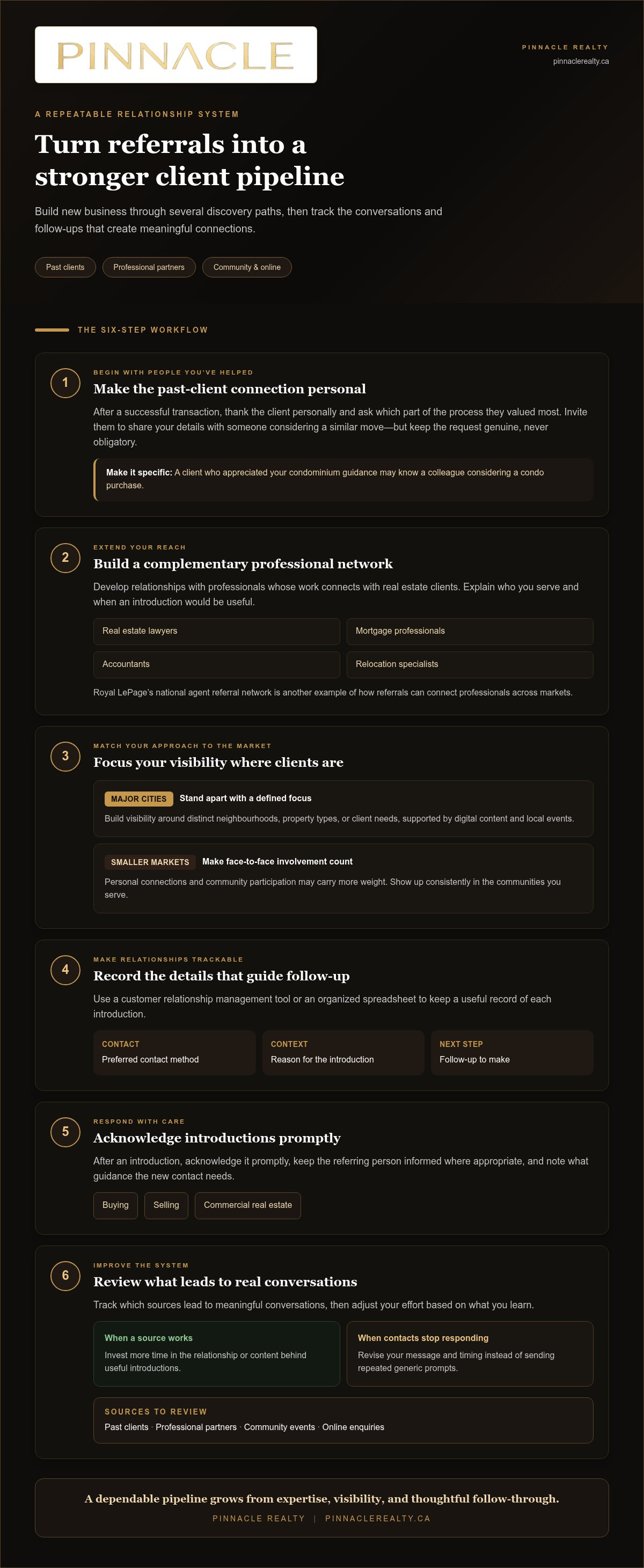
Start with clients you’ve already helped. After a successful transaction, thank them personally, ask which part of the process they valued most, and invite them to share your details with someone considering a similar move. Make the request specific: a client who appreciated your condominium guidance may know a colleague considering a condo purchase. Keep the exchange genuine, and never make a referral feel obligatory.
A professional referral network extends your reach beyond past clients. Build relationships with complementary professionals, such as real estate lawyers, mortgage professionals, accountants, and relocation specialists. Share the kind of client you serve and the situations where an introduction would be useful. Royal LePage’s national agent referral network is another named example of an agent network; it illustrates how referrals can connect professionals across markets.
In major Canadian cities, agents can focus their visibility on distinct neighbourhoods, property types, or client needs, then use digital content and local events to stand apart. In smaller markets, personal connections and community participation may carry more weight, so consistent face-to-face involvement can help generate recognition. In either setting, tailor your approach to how local clients find information and build trust.
Make referrals part of a repeatable system. Record each client’s preferred contact method, the reason for the introduction, and the next follow-up in a customer relationship management tool or organized spreadsheet. After an introduction, acknowledge it promptly, keep the referring person informed where appropriate, and note whether the new contact needs buying, selling, or commercial real estate guidance. This helps you maintain a dependable network without treating people like entries on a list.
Review the system regularly. Track which sources lead to real conversations, such as past clients, professional partners, community events, or online enquiries. If a channel produces useful introductions, invest more time in the relationship or content behind it. If contacts stop responding, revise your message and timing instead of sending repeated generic prompts. A clear process supports a stronger client pipeline while leaving room for the personal attention that earns future recommendations.
2. Direct mail, signs, online ads, and text marketing
Choose channels that match the property and audience. A neighbourhood postcard can introduce your local expertise, while a clear lawn sign can prompt nearby residents to ask about a listing. Add a specific next step, such as viewing property details or requesting a market update. Keep the message consistent across print, online ads, and social media so prospects recognize your professional identity.
Online campaigns work best when each ad has a defined audience and purpose. Promote a listing with polished photography, accurate details, and a direct path to learn more. A video walkthrough can show the flow of a home, while a neighbourhood tour can highlight nearby amenities. For commercial properties, focus on relevant features such as visibility, access, or adaptable space.
Social media and online marketing can generate leads through useful, locally focused content. Share a short property tour, explain a feature buyers often ask about, or post a concise market insight about a specific neighbourhood. Invite people to enquire, then respond with information tied to their stated interest. A national audience isn’t the goal for every campaign; local relevance can make your message more useful.
For Canadian outreach, build campaigns around consent, clear sender identification, responsible handling of personal information, and a straightforward way to stop messages. Real estate advertising should present listings and professional claims accurately. Privacy, anti-spam, and provincial real estate advertising requirements may apply, so tailor each campaign to its channel and jurisdiction rather than treating one template as universal.
There’s no single marketing budget that suits every Canadian agent. Set spending according to your target audience, chosen channels, campaign length, and the work needed to create content or distribute materials. Start with a defined campaign, such as promoting a listing through signs, a neighbourhood mailer, and a targeted online ad. Compare its cost with qualified enquiries before allocating more.
Build a simple tracking system for each campaign. Record its source, audience, spend, enquiries, and follow-up status in a spreadsheet or customer relationship management tool. Review which listings, social media posts, or mailers prompt meaningful conversations, not just clicks. Marketing analytics can show where prospects engage and help you adjust the message, audience, or channel for your next campaign.
A monthly newsletter can extend that relationship beyond a single listing. Include a local market observation, a practical buying or selling tip, and a featured property or neighbourhood detail. Personal branding comes through the same reliable choices: a consistent name and visual style, clear writing, and informed commentary. For a practical reference, review current property listings and note how details are presented.
3. Specializing in a real estate niche
A defined niche gives prospective clients a clear reason to remember you. Instead of marketing every property type to every buyer, focus on a client group, property category, or local market you can serve with depth. For example, an agent might specialize in condominium buyers, pre-construction properties, commercial sales, or clients moving into a particular Brampton neighbourhood. A niche makes your expertise easier to explain and your content more relevant.
Choose a focus by considering three practical factors: your experience, the questions clients ask, and the market knowledge you can maintain. If buyers regularly ask about condo fees, building amenities, and resale considerations, condominium expertise could suit your strengths. If you understand commercial locations and how businesses assess space, commercial real estate may be a better fit. Choose a direction you can support through careful research and consistent client service.
Then define the niche in language clients use themselves. “I help buyers compare condominium options in central Brampton” is clearer than “I work with all kinds of properties.” A focused statement helps people recognize whether your knowledge fits their plans. It also guides your website copy, social posts, networking conversations, and the updates you share with prospective clients.
Build visible expertise around real questions. A condominium specialist could explain how to compare layouts, review building amenities, and assess a listing’s location. An agent focused on pre-construction could create plain-language content about floor plans, timelines, and the buying process. For commercial clients, useful material might explore how location, access, and space requirements shape a property search. Keep each example specific and grounded in information you can explain accurately.
Apply your niche consistently across your marketing. Use the same focus in your profile, listing descriptions, email topics, and conversations with professional contacts. A strong brand isn’t just a polished logo; it’s a recognizable promise backed by relevant knowledge. If you serve condominium buyers, for example, make sure your content reflects that expertise instead of shifting between unrelated property topics.
Review the fit through actual conversations. Note which enquiries match your focus, what prospects ask, and which topics lead to deeper discussions. If your chosen niche draws interest but requires knowledge you haven’t developed, identify the gaps and strengthen your understanding before expanding your claims. Specialization should make your expertise clearer, not suggest capabilities beyond your experience. With a coherent focus, you can attract clients seeking guidance for a specific property or transition.
4. Building relationships in a local neighbourhood
Start by choosing a clear neighbourhood focus, then learn its details beyond property listings. Walk the area and note housing styles, parks, transit connections, and local businesses. In Brampton, compare a condominium corridor with nearby streets of detached homes. This knowledge helps you answer practical questions and attract clients who value guidance grounded in local experience.
Show up where residents already gather. Attend a community association meeting, visit a local library event, or support a neighbourhood business opening. Introduce yourself as a real estate professional, then listen before discussing your work. Remember names, local concerns, and useful contacts. Small details can turn a brief introduction into a valuable relationship built on familiarity rather than a sales pitch.
Offer information residents can use even when they aren’t preparing to move. A short guide might explain how to compare home styles on nearby streets or identify questions to ask during a property viewing. Share a neighbourhood business profile or a local-area update through your newsletter. Keep the focus specific, such as walkability, housing types, or nearby community amenities.
Make your local presence consistent. Choose a recurring event or community activity that fits your schedule, and participate as a neighbour, not simply as a marketer. If you support a school fundraiser or community clean-up, contribute your time and recognize the organizers. Residents notice whether your involvement continues after an introduction, so prioritize genuine participation over collecting contacts.
Neighbourhood relationships also include local professionals and business owners. A café owner may know which streets attract new residents, while a renovation contractor may hear questions about older homes. Build familiarity through useful conversations, and share your expertise when it helps. For commercial real estate, connect with business owners assessing location, visibility, or space needs.
Turn those conversations into relevant local content. If residents ask about the difference between a condominium and a townhome, address the question in a plain-language post. If business owners discuss access or storefront visibility, create an insight focused on those considerations. Specific answers show you understand local priorities and give people a reason to return to your updates.
Keep a simple record of community interactions. Note the event, topics discussed, and any information someone asked you to send. Follow up with the promised resource, such as a neighbourhood overview or a relevant listing, rather than an unrelated sales message. Over time, these thoughtful exchanges build recognizable relationships and make your local expertise easier to recommend.
5. Hosting open houses
An open house is both a property presentation and an opportunity to meet prospective clients. Begin by agreeing on the event’s purpose with the seller: introduce the home, connect with likely buyers, or showcase a distinctive feature. For a condominium, emphasize the layout and amenities. For a commercial property, prepare to discuss visibility, access, and possible uses. A defined focus helps the event stand out.
Prepare the property and your welcome before promoting the event. Walk through each room, identify details visitors may overlook, and plan a clear route through the space. Make listing information easy to access, and prepare concise answers about the home’s features. For example, note how a flexible den could work as a home office without making claims the property can’t support.
Promote the open house with consistent, accurate details. Share the date, location, property highlights, and visitor instructions through suitable listing and social channels. A brief property walkthrough or neighbourhood tour can help people understand the setting before they arrive. Use polished visuals to show the home’s character, while keeping the description aligned with the actual listing.
Give visitors room to explore, then make conversation easy. Welcome each person, explain the viewing flow, and ask which features they’re hoping to find. If someone is comparing homes, ask which priorities matter most, such as layout, location, or outdoor space. Listen before offering guidance. This turns a casual visit into a useful conversation without pushing for an immediate transaction.
For luxury or commercial properties, a private open-house experience may suit the audience. The event could include catering, live entertainment, or an expert question-and-answer session. Choose an approach that complements the property and gives visitors a meaningful reason to attend. Keep the format focused: an expert discussion about a commercial site, for instance, can address its features and potential uses.
After the event, organize your notes while conversations are fresh. Record each visitor’s stated interests and any information you promised to share. Follow up with a relevant listing or direct answer, rather than a generic message. Review which promotion brought visitors and which questions came up repeatedly. Those details can shape your next event and help refine how you serve buyers and sellers.
Thoughtful presentation begins with understanding the property itself. Explore current property listings to see how property details can inform an open-house conversation.
Pinnacle Realty: Residential Listing Services
Pinnacle Realty offers Residential Listing Services for homeowners preparing to bring a property to market. When you’re ready to move from building visibility to planning a sale, Pinnacle Realty’s elevated marketing and real local insight can help you shape the listing process around your property and goals.
Buyers can turn to Pinnacle Realty’s Buyer Agency Services for guidance as they assess homes and plan their next move. Pinnacle Realty also guides clients exploring condominium and pre-construction purchases, with attention to property details and individual priorities.
Whether you’re selling a home, searching for a property, or considering a condominium or pre-construction purchase, choose guidance that fits the transition ahead. Contact Pinnacle Realty to discuss your real estate needs.
Turn your next connection into a lasting relationship
The question of how to build a real estate client base becomes easier to act on when you choose one clear next step. Decide which audience you want to serve, then give your outreach a regular place in your working week. A thoughtful follow-up, useful local insight, or well-prepared property conversation can help turn an introduction into a trusted relationship.
For your own move, the right guidance should reflect your plans. Pinnacle Realty offers Residential Listing Services, Buyer Agency Services, and Condominium Sales to support clients at different stages of their real estate journey.
Whether you’re preparing to sell or beginning a property search, take the next step at your pace. Contact Pinnacle Realty today to discuss your real estate plans. A considered start can set the tone for what comes next.
Frequently Asked Questions
What are the best ways for a new real estate agent in Canada to find clients?
New agents can build early momentum by combining brokerage support, local knowledge, and visible examples of their work. Ask experienced colleagues how they prepare for buyer consultations, then practise explaining a property’s features in clear language. Create a concise introduction that states the clients you serve and the areas you know. In Brampton, be ready to explain how a buyer’s priorities may differ between a condominium and a family home.
How can real estate agents build a referral network with past clients and local professionals?
Build a referral network by making introductions useful and reciprocal, not transactional. After helping a client, ask permission to stay in touch and learn what kind of future move or advice may matter to them. With local professionals, clarify when an introduction could help, such as when a buyer needs legal guidance. Thank people for thoughtful referrals, and keep them informed about the introduction’s progress when appropriate.
Which real estate lead-generation methods have the best conversion rates and return on investment?
No lead source has a universally strongest conversion rate or return on investment; results depend on audience, follow-up, and campaign cost. Compare channels using the same measures: qualified enquiries, appointments, signed clients, and the time or expense involved. For example, assess whether a neighbourhood campaign attracts serious sellers or broad interest without intent. Keep records by source, then shift effort toward channels that produce relevant conversations.
What networking events and community activities help agents build a local client base?
Choose gatherings where local residents or business owners already discuss housing and community needs. In Brampton, agents might attend neighbourhood association meetings, business improvement events, cultural festivals, or local homebuyer education sessions. Volunteer for a community initiative that genuinely matters to you, then contribute before promoting your work. A useful conversation could begin with a resident asking about local housing options, not with an immediate request for business.
How can agents use open houses to attract and convert prospective buyers?
Use an open house to understand each visitor’s priorities, then offer a relevant next step. If a guest is comparing condominium layouts, ask what matters most in their search and offer to share suitable options. Record only information visitors willingly provide, and follow up with the details they requested. A considerate follow-up connects the property visit to a buyer’s decision process without assuming they’re ready to make an offer.
How can a new agent build credibility and trust without an established track record?
A new agent can earn trust by being prepared, precise, and transparent about their process. Bring a clear agenda to consultations, explain unfamiliar terms in plain language, and distinguish verified property details from personal opinion. If a client asks about an issue outside your knowledge, explain what you can and identify the appropriate next step. Practical preparation and consistent communication demonstrate professionalism before you have a long sales history.
What CRM and follow-up practices help real estate agents turn leads into clients?
Use a CRM to capture each contact’s goals, preferred communication channel, and agreed next action. Tag leads by situation, such as first-time buyer, seller preparing a home, or commercial property search. After every conversation, record one useful detail and schedule a relevant follow-up, such as sending a listing comparison. Review inactive records regularly, but personalize each message so clients receive information connected to their plans.


