

What if the strongest selling point of your Brampton condo isn’t inside the unit at all? When selling a condo in Brampton, buyers weigh the home’s condition and layout alongside the building’s maintenance fees, amenities and ownership context. A polished interior matters, but so does a clear picture of what ownership in the building involves.
It’s understandable to feel uncertain about where to begin. Recent comparable sales can help shape a realistic price, while unresolved repairs, missing documents or unclear building information can complicate a buyer’s decision. A practical strategy brings these details together before your condo reaches the market.
This guide explains how to prepare and present your unit, assess it against relevant Brampton condo sales, and organize information buyers may want to review. You’ll also learn how maintenance fees and building details fit into your listing, and what to consider as offers and closing steps unfold. Pinnacle Realty provides residential listing representation, strategic marketing and negotiation to help you plan and manage the sale.
Key Takeaways
- Build a condo-specific listing strategy around your priorities, the unit’s appeal and the building’s context.
- Compare relevant completed sales by location, building and unit features to support a grounded asking-price strategy.
- Present maintenance fees and building information clearly so buyers can assess the full ownership picture.
- For selling a condo in Brampton, prioritize visible upkeep, organized records and polished, accurate marketing.
- When reviewing offers, consider conditions and closing terms alongside the offered amount.
Selling a Condo in Brampton Starts with the Unit and the Building
A condo sale is shaped by two connected assets: the private suite and the building it belongs to. Buyers consider the home’s layout, condition and features, as well as shared amenities, common areas and the overall ownership context. A well-considered plan brings both into focus.
The goal is to align value, presentation and timing with your priorities, including your next move and preferred level of flexibility. For selling a condo in Brampton, pricing and positioning should be grounded in relevant local evidence, not a city-wide average or an asking price that only looks similar. Brampton’s neighbourhoods and housing options vary. Broader background on the City of Brampton can help frame the local setting, but a listing strategy calls for condo-specific comparisons.
Which condo details shape a Brampton sale plan?
Start by separating suite features from building context. Note the unit’s layout, natural light, storage, parking and condition, then record shared features such as amenities and the state of common areas. These details help describe the property accurately, but none automatically guarantees a higher value.
Useful comparables should resemble your condo in meaningful ways, including property type, size, condition, location and building context. A unit with a different layout or parking arrangement may offer less insight than one that closely matches yours. Base market conclusions on dated, verifiable local evidence, since conditions and buyer choices change over time.
What should sellers clarify before listing?
Decide what a successful sale needs to support. Clarify your preferred timing, plans for your next move and how flexible you can be with showings. These priorities help shape a practical launch plan around your transition.
Gather details buyers are likely to ask about: maintenance fees, parking and storage arrangements, and records of improvements you’ve made. Keep confirmed facts distinct from estimates, and make sure the listing information reflects the suite and building accurately. Pinnacle Realty’s Brampton residential listing services include strategic marketing and professional representation to help you prepare a considered sale plan.
With these fundamentals in place, you can move into pricing and preparation with a clearer picture of what makes your condo distinctive and what evidence supports its position in the market.
Price a Brampton Condo with Relevant Comparables, Not Guesswork
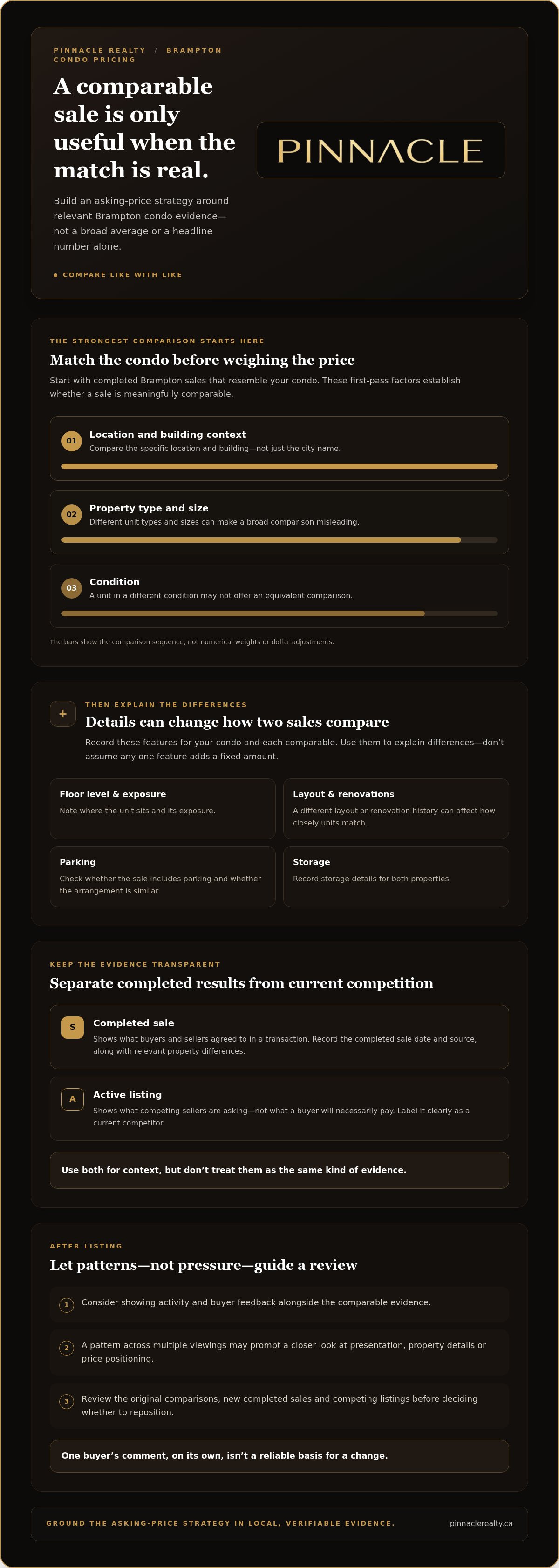
A sound asking-price strategy starts with evidence from properties buyers could reasonably consider alongside yours. For selling a condo in Brampton, the most useful comparisons account for the specific location and building, not just the city name or a broad average. Select examples that resemble your unit, then identify meaningful differences that may affect how buyers view them.
How do you choose useful condo comparables?
Begin with completed sales in Brampton that match your condo’s property type, building context, size, condition and location as closely as possible. Sale timing matters too: a transaction from a different market period may offer less insight into current buyer decisions. Record the date and source for each example so the evidence stays transparent and current.
Then note distinctions a headline price can conceal: floor level, exposure, layout, renovations, parking and storage. A renovated unit with parking may not be a direct match for one without those features. Don’t assume a feature adds a fixed amount; use it to explain why two otherwise similar sales may not be equivalent. Broad averages can blur these property-level differences, especially when they combine different unit types, sizes and buildings.
A simple comparison table keeps the analysis organized:
- Your condo: location, building, unit type, size, condition, floor, exposure, parking and storage.
- Comparable sale: the same details, plus its completed sale date and relevant differences.
- Active listing: asking price and features, clearly labelled as a current competitor rather than a completed result.
Completed sales show what buyers and sellers agreed to in a transaction. Active listings show what competing sellers are currently asking, not what a buyer will necessarily pay. Both can inform positioning, but they answer different questions. For broader context on condominium governance and ownership, consult the Condominium Authority of Ontario.
How should asking price and market response guide adjustments?
Once listed, consider showing activity and buyer feedback alongside the comparable evidence. A pattern across multiple viewings may suggest that the presentation, property details or price positioning needs a closer review. One buyer’s comment, on its own, isn’t a reliable basis for a change.
Review the original comparisons, new completed sales and competing listings before deciding whether to reposition. A considered adjustment responds to evidence and your priorities, not pressure or guesswork. Pinnacle Realty can develop a condo-specific listing strategy around local comparables, strategic marketing and your goals. Explore residential listing representation as you plan your next steps.
Address Condo Fees, Building Questions, and Buyer Concerns Before Listing
Buyers assess more than the asking price. They’re considering the suite and the ownership experience it represents, including maintenance fees, building amenities and information available about the condominium corporation. For sellers, clear, consistent details help buyers understand the full picture without overstating what a feature or fee means for value.
How can sellers prepare for questions about condo fees and amenities?
Gather the current maintenance-fee amount and available information about what it covers. Describe the figure factually. Fees alone don’t determine a condo’s value, and buyers may weigh them alongside the unit, building and included services. Avoid guessing about what’s covered or how fees may change.
Use the same verified details in listing materials and buyer discussions. Describe amenities and shared spaces as they are, not as a promise of future upgrades or uninterrupted access. A practical fact sheet can help keep answers aligned:
- Current maintenance-fee amount and documented inclusions
- Parking and storage arrangements associated with the unit
- Amenities and shared spaces, described accurately
- Known improvements to the suite, with dates or records where available
Which condo records and disclosures need careful handling?
Organize useful records before the listing launches. These may include information about the unit, parking and storage, renovation details, and building or condominium-corporation materials already available to you. Keep source documents together and distinguish confirmed information from anything you’re unsure about. Don’t speculate about building plans, financial matters or legal issues.
Ontario condominium terminology and document procedures matter. The Condominium Authority of Ontario offers guidance on condominium ownership and governance. Verify the current status-certificate process and any applicable duties or timelines before describing them as legal requirements. Details can depend on current rules and the circumstances of a sale.
For the broader seller’s role in an Ontario real estate transaction, consult the Real Estate Council of Ontario (RECO) guidance. A listing plan can then present the suite and building carefully, using accurate records rather than assumptions. That preparation supports a more confident experience of selling a condo in Brampton and gives buyers a clearer basis for their questions.
Prepare and Market Your Brampton Condo for a Strong First Impression
A polished first impression comes from thoughtful preparation, not necessarily major renovations. A clear sequence keeps the work focused: declutter, address visible maintenance, organize property information, then plan photography and showings. This helps buyers see the suite’s layout and features without distraction.
What should happen before condo photography and showings?
Start with simple, visible improvements. Tighten loose handles, replace burnt-out bulbs and tidy surfaces before considering larger work. Prioritize changes that make the home feel cared for, and avoid costly updates without a clear reason to expect they’ll support your selling goals.
A room-by-room check can keep preparation manageable:
- Living areas: Clear surfaces, reduce personal items and arrange furniture to show how people can move through the room.
- Kitchen and bathroom: Put away everyday items, clean visible surfaces and make sure lighting works.
- Bedrooms and storage: Edit belongings so closets and storage areas are easy to view.
- Throughout the suite: Open blinds where practical, check bulbs and keep walkways clear.
Before photography, gather accurate details about the layout, parking, storage, improvements and relevant amenities. Natural light can help rooms feel open, while an uncluttered flow makes the relationship between spaces easier to understand. Photography should represent the condo honestly, not hide limitations or imply features that aren’t there.
Showing plans also need to work for the building and the people who live there. Coordinate practical access, consider building procedures, and plan around residents, pets and your schedule. Clear arrangements help showings feel orderly while respecting privacy and shared spaces.
How should a condo listing present its strongest details?
Lead with specifics buyers can assess: the number and arrangement of rooms, natural light, parking and storage details, and the amenities available in the building. Describe location in clear, factual terms. Avoid broad promises about lifestyle or value; precise details help buyers decide whether the property fits their needs.
Consistent presentation matters across photography, the written description and showing information. Pinnacle Realty’s residential listing services combine strategic marketing with accurate property details. For selling a condo in Brampton, a considered combination of clean presentation and purposeful marketing can make the unit easier for prospective buyers to understand.
For support shaping a condo-specific listing and marketing strategy, discuss your Brampton condo sale with Pinnacle Realty.
Navigate Offers and Closing with a Brampton Condo Listing Partner
An offer is more than a number. Before deciding how to respond, review the complete terms against your priorities, your next-move plans and the evidence behind your listing strategy. Pinnacle Realty supports condo sellers through residential listing representation, strategic marketing and professional negotiation, helping keep decisions organized from offer review through completion.
How should sellers assess an offer on a Brampton condo?
Compare the full offer, not just the proposed price. Consider the deposit amount and timing, any conditions and their deadlines, the proposed completion date, and how each term fits your plans. A higher amount may come with conditions or timing that matter to you; a different offer may better suit your needs. No single factor determines the right choice.
Review the language carefully. Offer terms can carry important legal and practical implications, so discuss them with the appropriate professionals before accepting, countering or declining. Your listing representative can help explain the transaction process and negotiate within your instructions, but no particular outcome or sale timeline can be promised.
What happens between an accepted offer and closing?
Once an offer is accepted, the agreement sets the next steps. Keep a coordinated checklist that tracks condition deadlines, documents or records requested, communication with the relevant parties, and the proposed completion date. Organizing these details early can help reduce last-minute uncertainty.
- Track dates: Record each deadline stated in the agreement and who needs to act.
- Organize information: Keep requested unit and condominium records together, and respond through the agreed channels.
- Stay aligned: Share updates promptly with the transaction professionals involved so questions can be addressed in context.
The exact process depends on the terms of the agreement and current Ontario requirements. Confirm legal and closing questions with the appropriate professionals rather than relying on a general checklist as legal advice. Your listing partner can help coordinate transaction communication and keep the agreed steps visible as the sale moves toward completion.
Selling a condo in Brampton is a significant transition, and a clear plan can help you move through each decision with greater confidence. Discuss your Brampton condo selling plan with Pinnacle Realty.
Make Your Brampton Condo Sale a Considered Next Step
A strong condo sale strategy connects the suite’s appeal with the building context, uses relevant completed sales to inform pricing, and presents fees and property details clearly. Thoughtful preparation and organized records can help buyers understand what’s being offered, while a careful review of offer terms keeps your priorities in view beyond the proposed price.
Selling a condo in Brampton is also a personal transition. The right plan should reflect your timing, next move and comfort with the process, with clear guidance from listing through negotiation. Pinnacle Realty is a Brampton-based brokerage serving residential clients across the GTA, with residential listing representation, strategic marketing and negotiation tailored to your sale.
Ready to shape a condo-specific plan around your unit and goals? Discuss your Brampton condo sale with Pinnacle Realty. With thoughtful preparation and a local listing partner, you can move forward with greater clarity and confidence.
Frequently Asked Questions
How do I sell a condo in Brampton?
Start by setting your priorities, reviewing relevant Brampton condo sales and preparing information about your unit and building. Declutter, address visible maintenance, and plan accurate photography and showing arrangements. Once listed, consider offers based on their full terms, not just the price. Pinnacle Realty provides residential listing representation, strategic marketing and negotiation to help sellers manage the process from launch through closing.
How is a Brampton condo listing price determined?
A listing price is informed by comparable completed sales, the unit’s location and building, its size, layout, condition and features, and the timing of those sales. Parking, storage, floor and renovations can also help distinguish one property from another. Active listings show competing asking prices, not confirmed sale values. A broad city average may provide context, but it can’t establish the value of a specific condo.
Do condo fees affect how quickly a condo sells?
Condo fees can factor into a buyer’s assessment of overall ownership costs, but they don’t determine on their own how quickly a unit will sell. Buyers may also consider what the fees cover, the unit’s condition, the building and comparable properties. Present the current fee and confirmed inclusions clearly in the listing. Sale timing depends on multiple factors, including price positioning, buyer demand and the property’s appeal.
What documents do I need to sell a condo in Ontario?
Useful records may include details about the unit, parking and storage, maintenance fees, renovations and relevant condominium corporation information. Your real estate representative can help organize listing details, while your lawyer can advise on transaction documents and legal requirements. The exact records and procedures depend on the property and sale. Verify current Ontario condominium terminology and any applicable timelines rather than relying on a general checklist as legal advice.
Should I renovate my condo before selling in Brampton?
Not necessarily. Begin with decluttering, cleaning and visible maintenance, such as fixing a loose handle or replacing a burnt-out bulb. Consider larger renovations only when there’s a clear reason they fit your goals and property condition. A polished presentation, natural light and easy room flow can help buyers understand the unit without major work. Compare the proposed work with relevant Brampton condos and the features buyers will see.
How long does it take to sell a condo in Brampton?
There’s no fixed timeline for selling a Brampton condo. The time from listing to an accepted offer can vary with pricing, presentation, competition, buyer demand and the property’s features. Closing happens later, on the date agreed to in the sale contract, and any conditions can affect the steps in between. Use current, dated local market information for context, and avoid treating averages as a promise for an individual sale.
Can I sell my Brampton condo while it is tenant-occupied?
Yes, a tenant-occupied condo can be listed for sale, but the tenancy and the sale must be handled with care. A sale doesn’t by itself establish that a tenant must leave. Review the lease and current Ontario tenancy requirements with your lawyer, and coordinate showings in accordance with applicable rules. Clear communication and practical scheduling can help present the unit while respecting the tenant’s rights and privacy.


