

An accepted offer is a milestone, but it may not yet be a firm deal. If you’re wondering what to do after your offer is accepted on a house, start with the signed Agreement of Purchase and Sale (APS). It sets the deadlines that shape every next step.
It’s natural to feel excited and start thinking about moving in. First, keep the deposit, condition dates, financing and legal work on track. An offer with conditions remains conditional until those conditions are fulfilled or waived as set out in the agreement. An offer without conditions may be firm once accepted. The distinction matters, and so does the timing.
This Ontario-focused checklist explains what to do first, where to find each deadline and how to prepare for closing day. It covers coordinating your deposit, financing, condition reviews and real estate lawyer while keeping the agreed closing date in view. For buyers considering a home in Brampton, an organized process can bring welcome clarity to this important transition.
Key Takeaways
- To understand what to do after your offer is accepted on a house, use the signed Agreement of Purchase and Sale as your guide and note every deadline.
- Follow the agreement’s deposit instructions, then organize condition-related tasks and financing requirements.
- Know which obligations remain active while conditions are open and what changes when the deal becomes firm.
- Coordinate with your lawyer, lender and insurer, then plan your final walkthrough and move around the closing date.
- Keep key documents and communications organized so each step toward closing stays clear and manageable.
What happens after a house offer is accepted? Start with the agreement
An accepted offer is a significant milestone, but it doesn’t automatically mean every condition has been satisfied. In Ontario, the signed Agreement of Purchase and Sale sets out the terms both parties agreed to, including conditions, deposit requirements and closing obligations. The practical answer to what to do after your offer is accepted on a house starts with this document.
Take a moment to celebrate, then open the agreement and mark every date and required action. Don’t rely on a typical deposit window or a commonly used condition period. Your transaction follows the terms in your agreement, including any amendments.
Accepted offer versus firm deal: what changes?
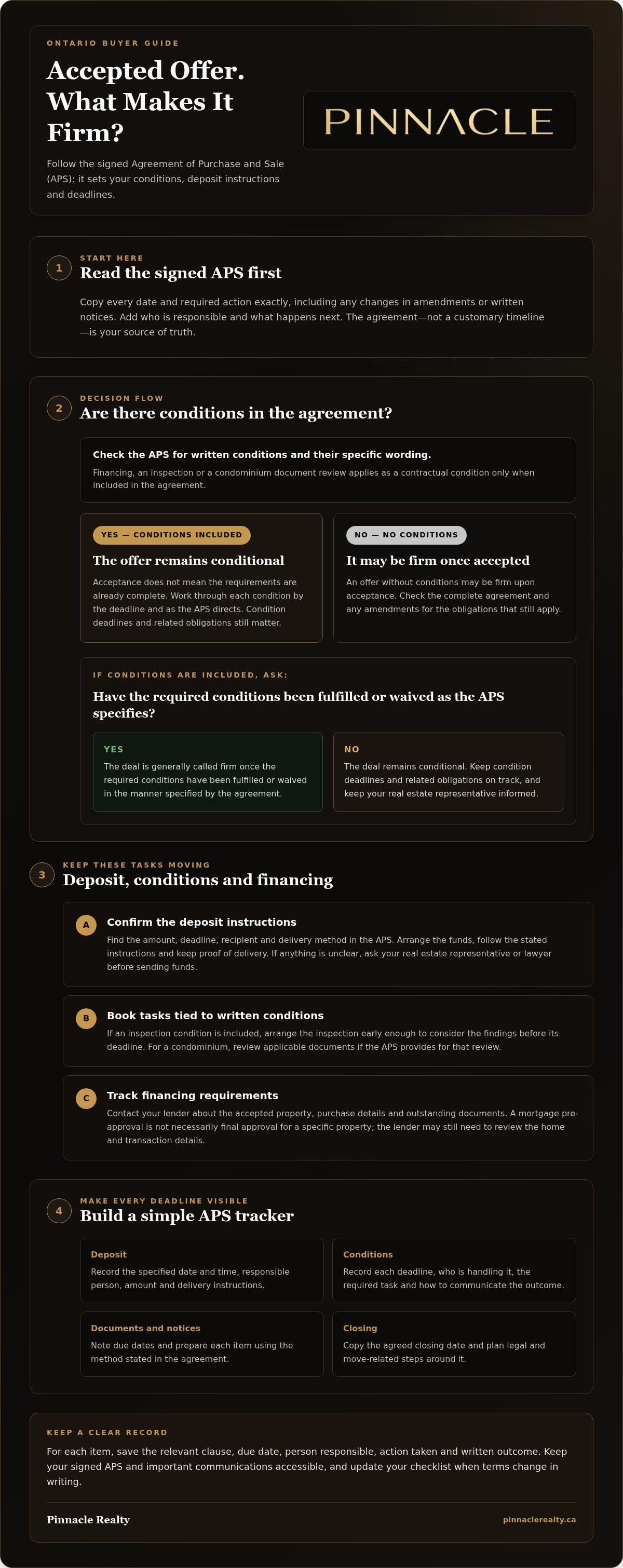
A conditional offer is an accepted agreement with requirements to be fulfilled or waived as set out in the APS. These might relate to financing or an inspection, but conditions and their wording differ between purchases. Acceptance doesn’t mean those requirements are already complete.
A deal is generally called firm after the required conditions have been fulfilled or waived in the manner specified by the agreement. Until then, condition deadlines and related obligations still matter. Read the relevant clauses carefully and keep your real estate representative informed as you work through each step. If you’re unsure what a clause requires, get guidance before acting or allowing a deadline to pass.
Build a deadline checklist from your agreement
Use the APS as your source of truth. Copy each date exactly, then add the person responsible and the next action. Include dates in amendments or written notices, too. If the agreement doesn’t include a particular deadline, don’t assume a standard one applies.
| Milestone | Date in your agreement | Responsible person | Next action |
|---|---|---|---|
| Deposit | Enter the specified date and time | Buyer / representative | Follow the agreement’s amount and delivery instructions |
| Conditions | Record each condition deadline | Buyer / relevant professional | Complete the required task and communicate the outcome as directed |
| Documents | Note any document or notice dates | Person named or responsible under the agreement | Prepare and deliver the required item using the stated method |
| Closing | Copy the agreed closing date | Buyer and legal representative | Plan the remaining legal and move-related steps around it |
Timing, delivery instructions and responsibilities vary by agreement. Keep a copy of the signed APS accessible, save important communications and update your checklist when terms change in writing. A clear record turns a busy transition into manageable steps and helps reduce last-minute surprises.
Next steps: deposit, conditions, and financing
Once you’ve identified the dates in your signed agreement, work through the early tasks in a deliberate order. The agreement controls what you must provide, when it’s due and how it must be delivered. Don’t assume a common deposit window or standard condition period applies. Follow the written terms and keep a record of each step.
- Confirm the deposit instructions. Find the amount, deadline, recipient and delivery method in the agreement. Organize the funds and transfer arrangements promptly, then keep proof of delivery.
- Book tasks related to written conditions. If the agreement includes an inspection condition, arrange the inspection early enough to consider the findings before the deadline. Note who is handling the task and what information they need.
- Track financing requirements. Contact your lender about the accepted property, purchase details and any outstanding documents. Record requests, submissions and responses so you can see what remains to be done.
How should you handle the deposit deadline?
Use the signed agreement for the exact deadline and payment instructions. Deposit terms differ between transactions, so don’t rely on a customary number of hours or assume a particular payment method. If instructions are unclear, raise the question promptly with your real estate representative or lawyer before sending funds. Save payment confirmation and related communications with your transaction records.
How do you work through conditions and mortgage approval?
Financing and a home inspection are common examples of conditions, but they apply as contractual conditions only when included in your agreement. Follow the wording and deadline for each one. A mortgage pre-approval is not necessarily final approval for a specific property. The lender may still need to review the home and transaction details. Coordinate promptly with your lender and real estate lawyer, and keep written records of questions, submitted documents and decisions about each condition.
When is an inspection or document review relevant?
An inspection condition matters when the agreement includes one, and the contract determines the steps and timing. For a condominium, review applicable condominium documents if your agreement provides for that review. Don’t assume a finding automatically gives you the right to renegotiate, cancel or recover funds. Your options depend on the agreement’s terms and how its requirements are met.
Keep a simple record for each item: the relevant clause, due date, person responsible, action taken and written outcome. If you’re buying in Brampton or elsewhere in the GTA, clear buyer guidance can help keep these tasks organized. Explore buyer agency guidance as you plan your next steps.
Accepted offer to closing: compare the conditional and firm-deal paths
The path from acceptance to closing changes as the requirements in your Agreement of Purchase and Sale are addressed. While written conditions remain open, focus on meeting their terms and deadlines. Once the deal is firm, shift your attention to completing the purchase and preparing for closing. The agreement guides both stages.
This distinction is central to what to do after your offer is accepted on a house: track what still needs to happen, and don’t mistake a firm deal for a completed purchase. Use the signed agreement and any written amendments to confirm your specific obligations.
| While written conditions remain open | After the deal becomes firm |
|---|---|
| Condition deadlines: Complete tasks tied to each condition, such as a financing review or inspection, only if that condition appears in the agreement. | Closing date: Keep the agreed date in view and organize the remaining steps required to complete the purchase. |
| Condition decisions: Any decision to fulfil or waive a condition must follow the agreement’s wording, timing and notice requirements. | Financing: Continue working with your lender to meet outstanding requirements for the specific property and transaction. |
| Other contract terms: Deposit instructions and other obligations remain relevant. A condition period doesn’t replace the rest of the agreement. | Legal and practical preparation: Coordinate conveyancing with your lawyer, arrange insurance and prepare for the move. |
| Written records: Keep copies of reports, submitted documents, questions and condition-related communications. | Ongoing obligations: Continue meeting the agreement’s requirements through closing and retain records of important communications. |
What should buyers focus on while conditions are open?
Start with the conditions actually written into your agreement, then work backwards from each deadline to arrange the relevant appointment, review or lender discussion. For example, if the APS includes an inspection condition, book the inspection and allow time to consider the report before the contractual deadline. Don’t treat a condition as fulfilled or waived based on an informal conversation. Follow the agreement’s process and get guidance if the wording or next step is unclear.
Communicate promptly and keep a written record. Share relevant updates with your real estate representative, lender or lawyer, as appropriate, and save notices and responses in one place.
What changes once the agreement is firm?
Once the required conditions have been fulfilled or waived as set out in the agreement, the transaction generally moves into the firm-deal stage. Priorities shift, but the purchase isn’t finished. Continue meeting contractual obligations while your lawyer handles legal conveyancing and you coordinate remaining lender requirements, insurance and closing arrangements.
A firm deal shouldn’t be treated as freely cancellable. The consequences of failing to complete can depend on the agreement and circumstances. If a serious issue arises, speak with your real estate lawyer promptly before taking action. Keep the closing date, outstanding requirements and written records in view until the transfer is complete.
Your Ontario home-closing checklist: legal, insurance, and move preparation
Once your agreement is firm, the focus shifts to completing the purchase and preparing for possession. The closing date is the anchor, but several people and practical details need to align beforehand. As you decide what to do after your offer is accepted on a house, work through these steps and keep your lawyer’s and lender’s instructions close at hand.
What should your lawyer and lender coordinate before closing?
Your Ontario real estate lawyer manages the legal closing work. This can include reviewing title, preparing documents, coordinating the transfer and explaining the funds and paperwork required from you. Your lender may also need final documents before mortgage funds can be advanced. Respond promptly to requests, and direct legal or financing questions to the professional handling that part of the transaction.
Budget planning matters, too. Ontario Land Transfer Tax may be payable as part of the purchase, and a property in Toronto may also be subject to the City’s Municipal Land Transfer Tax. The amount, any applicable rebate and the funds needed for closing depend on your circumstances and property. Ask your lawyer to explain the figures for your transaction rather than relying on a general estimate.
- Coordinate with your lawyer. Provide requested information and documents, review instructions carefully, and clarify how and when closing funds must be delivered. Your lawyer can outline what’s needed to complete the transfer.
- Complete lender requirements. Stay in touch with your lender about outstanding paperwork and funding arrangements for the specific property. Keep copies of submitted documents and note any remaining requests.
- Arrange home insurance. Speak with your insurer early enough to meet the requirements and timing provided by your lender and lawyer. Confirm the effective date with them rather than assuming a generic start date.
- Plan the final walkthrough. Arrange access through the appropriate transaction channels and compare the property with the condition and included items set out in your agreement. If something appears inconsistent, document it and promptly raise it with your real estate representative before closing.
- Organize the move. Schedule movers, arrange utility accounts and plan key pickup around the confirmed closing arrangements. Don’t assume keys will necessarily be available at the start of the scheduled closing date. Follow updates from your lawyer or real estate representative.
How do insurance, the walkthrough, and moving fit in?
These practical details are easiest to manage when coordinated with legal and lender timelines. A walkthrough lets you observe the home and included items, but it doesn’t replace the agreement or legal advice. Keep notes and communicate concerns promptly. Confirm moving access and key handover arrangements through your transaction team so your plans reflect the actual closing process.
For buyers purchasing in Brampton, clear guidance can help bring the legal, financial and moving pieces into focus. Discuss your Brampton home purchase with Pinnacle Realty as you prepare for this next chapter.
Move toward closing with clear GTA buyer guidance
From an accepted offer to the handover of keys, a home purchase moves through distinct stages. Follow the Agreement of Purchase and Sale, complete any written conditions, prepare for closing and retain records of important instructions and decisions. This structure turns a major life transition into a series of manageable next steps.
How can buyer guidance keep the process organized?
Clear communication keeps dates, responsibilities and outstanding questions visible. Your real estate representative can help you understand the transaction’s moving parts and coordinate updates with the appropriate people, while your lawyer and lender address legal and financing matters within their roles. Keep the agreement and written updates together so you can refer to the same record when questions arise.
Local insight adds useful context to a purchase in Toronto, Mississauga or elsewhere in the GTA. Property type, transaction details and the requirements in your agreement all shape the path to closing. Buyer agency guidance can help you stay oriented as those details come into focus. Learn more about buyer agency guidance for your next chapter.
What should you do next?
Start with one practical action. Open your signed agreement and write down the next three deadlines, along with the person responsible and the action required for each. Include the date and time as written, then check your list against any amendments or written notices. Keep it somewhere easy to review and update it as tasks are completed.
Next, match each question to the right professional. Ask your real estate representative about the transaction process and coordination, direct legal questions to your lawyer, and take financing questions to your lender. If a deadline, notice or contractual condition is unclear, raise it promptly rather than relying on assumptions or a generic timeline.
The central principle is simple: let the agreement set the pace, document each step and prepare for closing before the final days. With clear guidance and a view of what comes next, you can move forward with greater confidence, whether your purchase is in Toronto, Mississauga or across the GTA.
If you’re considering buyer guidance for your next steps, arrange a Private Consultation with Pinnacle Realty.
Make your next move with confidence
The next chapter of a home purchase isn’t only about reaching closing day. It’s also a chance to make deliberate decisions about the place and lifestyle you’re building toward. If you’re still considering what to do after your offer is accepted on a house, let your agreement guide the immediate steps while you keep your longer-term priorities in view.
For a purchase in Toronto, Mississauga or the GTA, thoughtful buyer representation can bring local context to the decisions ahead. Pinnacle Realty provides buyer agency services across the GTA, with clear guidance and real local insight to help you approach the process with perspective. A conversation can help you clarify what matters most in this transition without adding pressure to an important milestone.
When you’re ready to talk through your next steps, arrange a Private Consultation. A considered plan can make the road ahead feel more assured. Your next chapter is within reach.
Frequently Asked Questions
Can a seller accept another offer after accepting mine?
A seller may receive or consider another offer, but an accepted agreement generally remains in place according to its terms. A backup offer may be discussed, but it doesn’t automatically replace your agreement. The result can depend on the wording, including any applicable conditions or clauses. If you hear that another offer is involved, contact your real estate representative and lawyer promptly. Keep following your agreement unless you receive clear professional guidance otherwise.
Is an accepted offer legally binding in Ontario?
Generally, yes. Once an offer has been accepted in accordance with its terms and the agreement is properly formed, the parties are expected to follow it. Conditions don’t make an agreement informal. They set out requirements and deadlines that may affect how the transaction proceeds. The exact wording matters, especially if there’s a disagreement about acceptance, a notice or a condition. Have your lawyer review the signed documents if you’re uncertain about your obligations.
How long does it usually take to close on a house in Ontario?
There’s no single standard closing period across Ontario. For a GTA home purchase, a common range is about 30 to 60 days, though transactions can be shorter or longer depending on the agreement and circumstances. New construction, lender requirements or the parties’ preferred timing may shape the date. Your closing date is the one written in your agreement, so use it to plan notice, moving arrangements and other commitments.
What happens if the seller does not leave an included item behind?
Document what’s missing and compare it with the item description in your signed agreement. For example, note whether a specifically listed appliance or fixture was absent at the walkthrough or on possession. Tell your real estate representative and lawyer promptly, and keep relevant photos and written messages. Don’t assume you can withhold closing funds or that a particular remedy applies. Your lawyer can assess the contract and advise you on appropriate next steps.
Can the closing date change after an offer is accepted?
It can change if the parties agree to a revised date, but don’t treat a requested change as approved until the proper arrangements are made. Contact your lawyer as soon as a conflict arises, since the lender, moving plans and other commitments may also need adjusting. Ask for any agreed change to be documented in writing through the appropriate transaction process. Until then, continue planning around the closing date in your agreement.
What happens if a buyer cannot close on the agreed date?
Contact your real estate lawyer immediately if you may not be able to complete on time. Missing the agreed date can have serious contractual consequences, potentially including a claim for losses. What applies depends on the agreement and circumstances. Don’t assume an extension will be granted or that the deposit is automatically returned or forfeited. Your lawyer can explain the risks, communicate with the other side and advise you before you take further action.


