

What if the second unit that makes a Brampton duplex look like a smart buy hasn’t been legally recognized? When buying a duplex in Brampton, weigh the appeal of added space or rental income against what the property is actually approved and suitable to support. Look beyond the listing, since the unit’s status, condition and ongoing costs can shape both your plans and your offer.
This guide will help you assess whether a property fits your goals as an owner-occupier or investor, and identify what to verify before deciding. Learn how to check second-unit registration and zoning, review property details and documents, and compare realistic rental potential with carrying costs. We’ll also cover local considerations around tenants, inspections and financing, so you can approach each listing with greater clarity. Careful due diligence and informed local guidance can help you make a decision that suits your needs.
Key Takeaways
- When buying a duplex in Brampton, look beyond the listing description. Assess whether the property’s layout and unit configuration suit your ownership plan.
- Build a verification sequence: review available documents, request relevant records, investigate gaps and confirm the second unit’s status with the City of Brampton.
- Compare properties against your daily needs, including privacy, parking, maintenance, location and intended use.
- Discuss your circumstances with a lender, and review potential offer conditions and document requests with your buyer representative and legal professional.
- Clarify your goals, shortlist suitable properties and resolve material questions before deciding whether to waive offer conditions.
Buying a Duplex in Brampton: Start With the Right Property Fit
Before comparing finishes or estimating possible rental income, define what you need the property to do. A duplex is generally a residential building arranged as two living units, but the term can describe different layouts. The units may be stacked or side by side, with separate entrances or some shared access. For a broader overview of what is a duplex, remember that real estate terms can vary by context. A property described as a duplex is not necessarily a triplex or a home with a separate accessory unit, and its listing label alone doesn’t prove municipal approval.
What should buyers mean by “duplex”?
Focus on how the home functions, not just what it’s called. A self-contained second unit is designed for independent day-to-day living, while a shared-space arrangement may involve common rooms, entrances or facilities. Layouts, services and ownership arrangements can also differ. Two living units within one property don’t automatically mean the units can be owned or sold separately.
As you review a listing, note what it says about entrances, kitchens, bathrooms, laundry and shared areas. Treat these details as questions to investigate, not confirmation that the unit is approved for its intended use. Assess the property’s status and records separately.
Which duplex setup matches your plans?
Your intended use shapes what “right fit” means. If you plan to live in one unit and rent the other, consider how separate the entrances feel, whether the layout supports privacy, and how parking, storage and household routines might work for both occupants. If you’re considering renting both units, think through how you’ll use the property and assess each unit’s condition and practical appeal without assuming a particular income or outcome.
A family arrangement may call for different priorities: convenient access between units, enough privacy for each household, and shared spaces that work for everyday needs. Consider each scenario before touring. Rank your priorities so attractive finishes don’t distract from essentials:
- Location: Consider commute patterns and the amenities your household uses.
- Layout: Assess privacy, access, parking and storage for each unit.
- Condition and flexibility: Decide what you can accept now and what may limit future plans.
This shortlist gives you a consistent way to compare properties. When you’re ready to browse, explore Brampton property listings with your intended use in mind. A local buyer representative can help you evaluate listing details and consider how each property aligns with your priorities.
Verify the Second Unit and Property Condition Before You Offer
A second kitchen or separate entrance can make a property appear ready for two households, but appearances aren’t proof of approval or safe, compliant construction. A listing label doesn’t confirm that a second unit is legally recognized. When buying a duplex in Brampton, verify the unit’s status and the home’s condition before treating its layout or potential use as established.
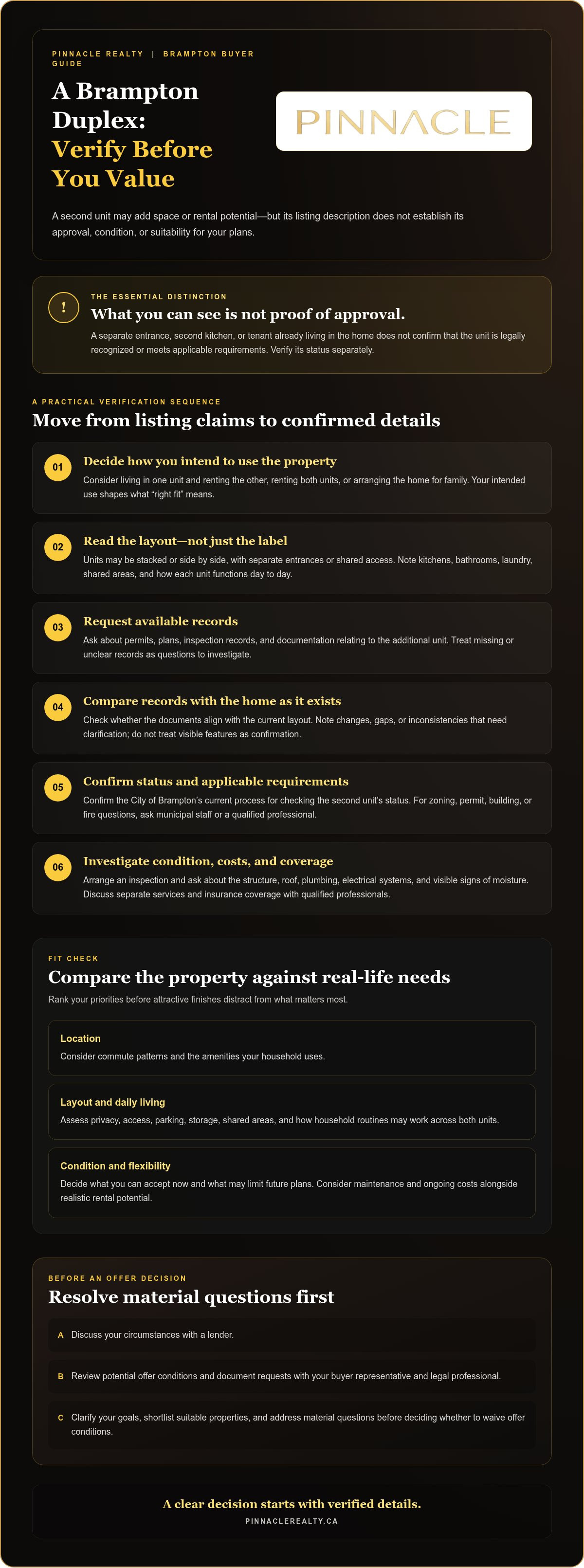
Use a deliberate sequence. Start with documents supplied in the listing, request available records, investigate gaps or inconsistencies, then seek guidance from the appropriate professionals. Confirm the City of Brampton’s current process for checking the second unit’s status and applicable requirements. Don’t rely on an informal description or assume that a feature visible during a showing confirms compliance.
Which records and approvals should you ask about?
Ask for available permits, plans, inspection records and documentation relating to the additional unit. Compare the records with the property’s current layout, and note any changes that need clarification. A tenant already living there, a separate entrance or a kitchen doesn’t establish that the unit meets applicable requirements.
If records are missing or unclear, ask municipal staff or a qualified professional how to confirm the relevant zoning, permit, building and fire requirements. Keep a written list of questions and answers. Ask qualified professionals about separate services, such as utility arrangements, and discuss with an insurance provider how the property’s use and unit configuration affect coverage.
What should a duplex inspection examine?
Arrange an inspection and ask the inspector to assess the structure, roof, plumbing, electrical systems and visible signs of moisture. Share the property’s two-unit configuration in advance so you can discuss whether the inspection’s scope covers the areas that matter to your plans.
Some questions may require other qualified professionals. Discuss separation between units, heating, ventilation and life-safety items with the appropriate specialists. Don’t assume a general inspection answers every technical or compliance question. Record unresolved issues, ask whether further assessment is warranted, and consider what the findings mean for your intended use before moving ahead.
Keep the evidence organized: listing documents, requested records, inspection findings and unanswered questions. Review material concerns with your buyer representative and legal professional before deciding how to proceed with an offer or whether to waive any conditions. A local buyer representative can help you assess listing information and navigate offer decisions. Learn more about buyer representation in the GTA.
Compare Brampton Duplexes by Lifestyle, Location, and Ownership Plan
Once you understand a property’s configuration, compare how it would work in daily life and under your ownership plan. Look beyond the number of bedrooms: privacy, upkeep, location and realistic use can distinguish a strong fit from a listing that only looks appealing on paper.
| Factor | What to compare |
|---|---|
| Layout | Consider how each unit’s rooms, entrances and shared areas suit the people who may live there. |
| Privacy | Notice sound transfer, sightlines and how independently occupants can come and go. |
| Parking | Check the available spaces and how residents or visitors would access them. |
| Maintenance | Compare the property’s condition and features that may affect ongoing upkeep. |
| Location | Assess travel routes and nearby services at the property’s actual address. |
| Intended use | Decide whether the setup supports living in one unit, renting both, or accommodating family. |
How do you assess the location for your household?
Start with the routines that matter to you. Check transit options and commuting routes, then identify nearby schools, parks, shops and other services that fit your household’s needs. Verify locations and travel times using the specific address rather than relying on a broad neighbourhood label. A route that seems convenient on a map may not suit your regular schedule.
Consider each unit’s access and parking, too. Think through how residents would arrive, store belongings and manage day-to-day errands. These practical details matter whether the second unit is intended for a tenant or a family member.
How should buyers compare potential rental use?
Separate confirmed lease information from advertised rent and estimates. Ask what evidence supports any income figure, and record the assumptions behind your own comparison. Projected rent isn’t a promise of what a unit will earn or how much of the ownership cost it may offset.
Set potential rent beside the responsibilities and costs of ownership, including vacancy, repairs, utilities, insurance and property taxes. Details will vary by property and circumstances. Ask a mortgage professional about financing questions and an accountant about tax considerations specific to you. For context on buyer representation, read the GTA buyer agency guide.
Comparing each property against the same priorities and clearly stated assumptions makes buying a duplex in Brampton a more considered process. A buyer representative can help you evaluate listings and offer decisions. Explore buyer agency services as you plan your next steps.
Plan Your Brampton Duplex Offer, Financing, and Due Diligence
A confident offer starts with information, not assumptions. Before you decide what to propose, understand your financing position, the property’s known condition and the records still to be confirmed. Assess a duplex using confirmed records, inspected condition and realistic ownership assumptions.
What should you prepare before submitting an offer?
Speak directly with a qualified lender about your circumstances and the specific property. Don’t assume you’ll qualify based on a general estimate or that potential rental income will be treated a particular way. Ask what documentation the lender needs and whether the property’s configuration or intended use raises questions for their review.
Bring the key details together for your buyer representative and legal professional. A concise file can include:
- Property information: Listing details, available permits and plans, and records about the second unit.
- Condition findings: Inspection results and any outstanding questions or recommendations for further assessment.
- Occupancy details: Available tenancy information, including agreements and details relevant to your intended use.
- Ownership costs: Verified property tax information, insurance questions, utilities, anticipated maintenance and other known expenses.
Discuss suitable offer conditions, timelines and deposit details with your buyer representative and lawyer. The right terms depend on the property and your circumstances, so don’t rely on a generic template or assume a condition will address every concern. Confirm how any proposed condition works before you submit an offer.
Which local and professional checks matter?
For a Brampton property, confirm current second-unit requirements and the City of Brampton’s process for checking its status. Ask municipal staff or qualified professionals about applicable zoning, permits, building and fire requirements. If a detail remains unclear, record the question and identify who can verify it rather than treating an informal explanation as confirmation.
A real estate lawyer can review title, agreements and legal questions, including matters related to any existing tenancy. Ask an insurance professional how the property’s configuration and planned use may affect coverage. A tax professional can discuss how your individual circumstances may apply. These specialists address different questions, and one review shouldn’t be treated as a substitute for another.
Before moving forward, make a short decision checklist: what has been confirmed, what remains open, who will answer each question, and by when. Resolve material concerns with the relevant professionals before deciding whether to waive offer conditions. For support evaluating the listing and navigating offer decisions, discuss your duplex purchase plans with a buyer representative.
Buy a Brampton Duplex With a Clear Next Step
A considered purchase follows a clear sequence: clarify how you’ll use the property, shortlist homes that fit, verify the second unit, arrange an inspection, then decide whether the evidence supports an offer. Keep a written record of open questions and who can answer them. Don’t waive conditions while material concerns remain unresolved. Discuss the terms and their implications with your buyer representative and legal professional.
What should your duplex viewing checklist include?
Take the same notes at every viewing so you can compare properties against your priorities, not just first impressions. Record the layout, visible condition, parking, utilities and how each unit is accessed. Note differences between the units, including finishes, storage and shared areas, and flag anything that needs closer inspection.
Ask what available records confirm the second unit’s status and which details remain unverified. After each visit, compare your observations with your written ownership plan. A feature that suits a full-rental scenario may matter less if you plan to live in one unit and accommodate family in the other.
How can a local buyer representative help?
Buyer representation can provide a professional resource for reviewing listing information and considering offer decisions. A Brampton-based brokerage with a local market focus can help you organize property questions and, where appropriate, support negotiation. It doesn’t replace confirmation from the City, a property inspection, lender guidance or legal advice, and no representative can guarantee a particular outcome.
Buying a duplex in Brampton is a significant decision. Bring your preferred locations, intended use and unresolved due diligence questions into a conversation with your representative, so the search reflects what matters to you. You can explore current Brampton listings and learn about buyer representation services as you consider your next step.
Take Your Brampton Duplex Search Forward
Buying a duplex in Brampton calls for more than finding a layout that looks promising. Start with a clear ownership plan, compare properties against your household’s priorities, and confirm the second unit’s status through appropriate records and City of Brampton guidance. Then weigh inspection findings, financing advice and realistic ownership costs before deciding how to proceed.
Keep unresolved questions visible and discuss material concerns with the right professionals before waiving offer conditions. A measured process can help you move from browsing to a decision grounded in the property’s details and your goals.
Pinnacle Realty is a Brampton-based brokerage serving buyers across the GTA. Its residential buyer agency includes professional negotiation, with local guidance to support your listing review and offer decisions. Explore Brampton listings and discuss your duplex search with Pinnacle Realty.
Frequently Asked Questions
Is a second unit in a Brampton duplex automatically legal?
No. A listing description, separate entrance or existing tenant doesn’t by itself confirm municipal approval or compliance. Ask the seller for available permits, plans and other records, then verify the property’s status with the City of Brampton and qualified professionals. Requirements can depend on the property and current rules. Don’t rely on assumptions or verbal assurances alone. Document unanswered questions and clarify them before making decisions about an offer.
What should I check before buying a duplex in Brampton?
Confirm how the property and each unit are described, request available permits and plans, review tenancy details and arrange a professional inspection. Ask about parking, utilities, insurance, maintenance and unresolved work that could affect your intended use. Verify current local requirements with the City of Brampton, and have a real estate lawyer review relevant legal documents before you commit. Keep a written list of open questions and identify who can confirm each detail.
Can I rent out one unit while living in the other?
That may be possible, but don’t assume the second unit is approved for rental or suitable for occupancy. First verify its status and check the applicable tenancy obligations for your circumstances. Speak with your lawyer, insurer and lender about the property and your plans. Confirm relevant local requirements before estimating rental income or making an offer based on the second unit. An existing tenant or separate entrance doesn’t establish approval.
How do I confirm whether a Brampton duplex has an approved second unit?
Request available permits, plans, inspection records and other documentation from the seller, then use the City of Brampton’s current process to confirm the property’s status. A real estate lawyer or qualified building professional can help identify records or questions that need further review. Don’t treat a listing label, separate entrance or past occupancy as proof of approval. If information is missing or inconsistent, seek clarification from the appropriate source before proceeding.
What should I include in a duplex viewing checklist?
Record the layout and condition of both units, entrances, parking, utilities and visible maintenance concerns. Note how the property fits your intended use, and ask which documents support the second unit’s status and whether tenancy information is available. Where permitted, photograph details you’ll want to review later. Keep unanswered questions in writing, compare the viewing with your priorities, and follow up with the City or relevant professionals before deciding how to proceed.
Should I buy a duplex as an owner-occupier or an investor?
The better fit depends on your household plans, financing, comfort with landlord responsibilities, and the property’s verified condition and unit status. Compare both scenarios using realistic assumptions, not advertised rent alone. Consider the time and costs involved in ownership, including maintenance and any applicable tenancy responsibilities. Discuss financing questions with a lender, and seek legal or tax advice from qualified professionals before deciding which plan makes sense for your circumstances.
Do I need a real estate agent to buy a duplex in Brampton?
You can explore listings independently, but a buyer representative can help assess property information, organize questions and support offer negotiations. For a duplex, ask how they can help review available second-unit documents and coordinate due diligence. Representation doesn’t replace confirmation from the City of Brampton, a professional inspection, lender guidance or legal advice. Direct each municipal, building, financing and legal question to the appropriate qualified professional before relying on an answer.


