

What if the first estimate you see is a starting point, not the answer? Searching “free home valuation Brampton” can bring up different figures, leaving you to work out which one reflects your home and its local market.
Online estimates offer a broad snapshot, but they may not account for recent comparable sales nearby, your property’s condition or features that distinguish it from similar homes. A valuation is useful guidance, not a commitment to list.
This article explains what a free valuation can and can’t tell you, how Brampton location and comparable sales shape an estimate, and which property details to gather before discussing your options. You’ll also learn why current market value differs from assessed value for property taxes. With context from a Brampton-based brokerage, you can use an estimate as one part of deciding whether and when selling fits your plans.
Key Takeaways
- A free home valuation Brampton search can offer a useful starting point, but compare the estimate with local sales and your home’s specific context.
- Focus on recently sold homes with meaningful similarities, then consider how your property’s layout, condition and updates affect the comparison.
- An online estimate provides an initial reference; a property-specific review can add local context.
- Prepare your address and accurate details about renovations, maintenance, parking and other features for a more informed discussion.
- Weigh the estimate alongside your home’s condition and your timeline. Getting an estimate doesn’t commit you to listing.
What Does a Free Home Valuation in Brampton Actually Tell You?
Two online estimates for the same home can show different figures. That doesn’t necessarily mean one is useful and the other is wrong. Each may rely on different data, assumptions or property details, and a single number can’t capture every feature that influences what a buyer might pay.
A home valuation is an informed estimate of a property’s likely market value, not a guaranteed sale price or a formal appraisal. A free home valuation Brampton search can help you begin thinking about a move, but an estimate’s usefulness depends on the information behind it and how closely that information reflects your home and its local market.
Location, property type, condition and recent comparable sales all matter. A detached home and a condominium may appeal to different buyers and need to be compared with different sales. Even homes on nearby streets can differ in layout, upkeep, parking or access to amenities. Local context helps make sense of those distinctions without treating a broad estimate as a precise promise.
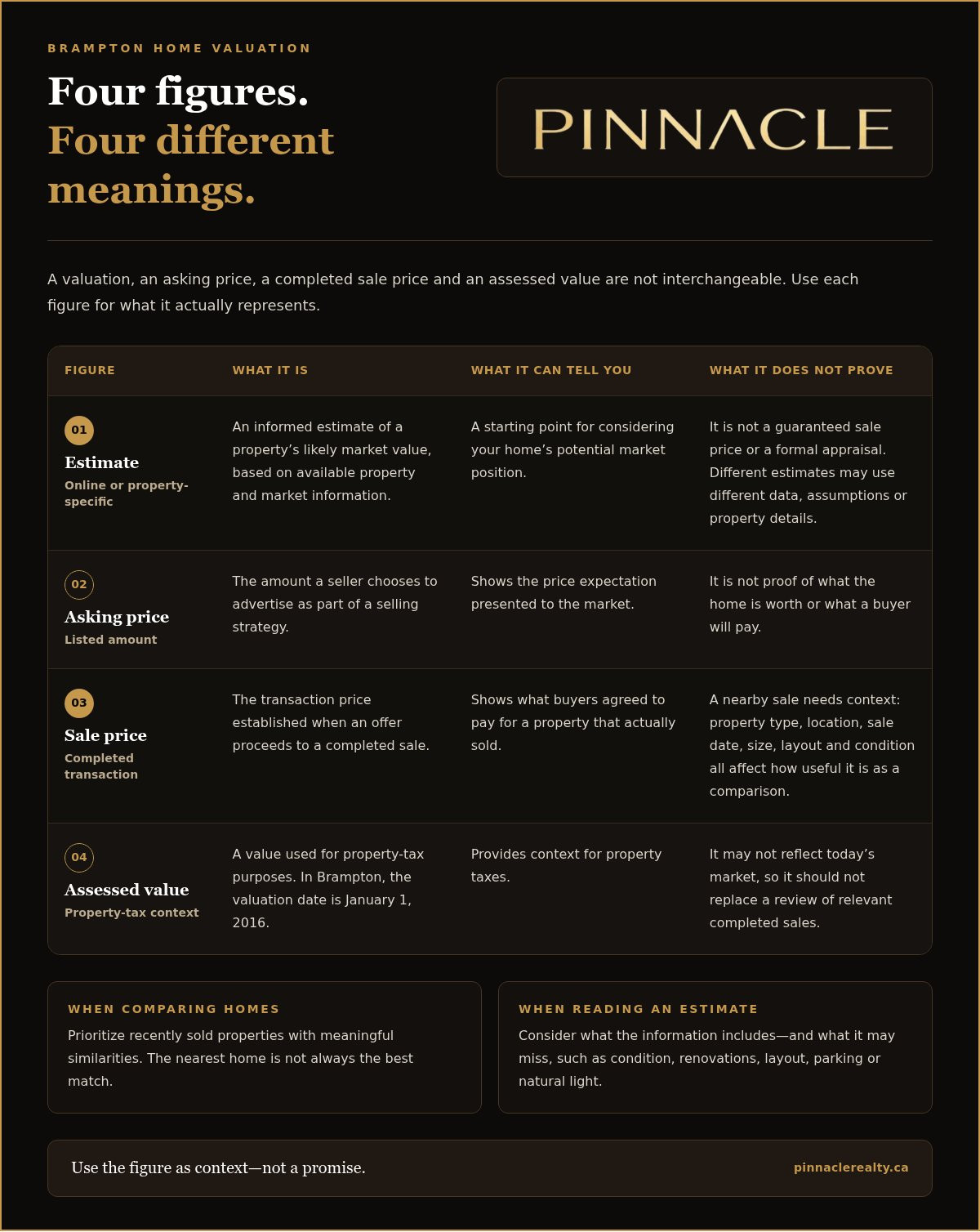
Estimate, asking price, and sale price: what is the difference?
An estimate is a starting point based on available property and market information. An asking price is a selling strategy: it’s the amount a seller chooses to advertise, not proof of what the home is worth or what a buyer will pay. The final transaction price is established when an offer proceeds to a completed sale. These figures can differ, so don’t treat a listing price as evidence of a home’s eventual selling price.
Why a Brampton address alone cannot determine value
A city name or postal code offers only a broad geographic clue. Neighbourhood character, the specific street, property type and nearby amenities can all affect buyer interest. A useful comparison looks beyond distance. It considers whether a recently sold home shares meaningful features with yours and accounts for differences in size, layout and condition. Local context matters more than a map pin alone.
A home valuation is also different from an assessed value. In Brampton, property taxes are based on an assessed value using a January 1, 2016 valuation date, which may not reflect today’s market. A formal appraisal is a separate, more structured assessment. For background on the distinction, see What is real estate appraisal?
Read an estimate as a guide, not a verdict. Understanding what it includes, what it leaves out and how it relates to comparable sales gives you a clearer basis for considering whether and when to sell.
How Brampton Comparable Sales and Property Details Shape Your Estimate
A useful estimate depends on more than what homes are listed for nearby. Comparable sales are properties that have actually sold and share relevant features with yours. Their sale prices show what buyers agreed to pay, while active listings show the competition sellers currently face. An asking price reflects a seller’s expectations, but it doesn’t confirm what a buyer will ultimately pay.
Choosing useful Brampton comparable sales
Start with homes of a similar property type in a relevant location. A detached home is generally a more useful reference for another detached home than for a condominium, even if the condo is closer. Then consider sale dates: a comparison from a different market period may reflect different buyer demand and conditions. The best match isn’t always the nearest one. A nearby property with a substantially different size, layout or condition may tell you less than a better-matched sale a little farther away.
For example, comparing two similar homes on nearby streets may help frame an estimate. But a major difference in living space, parking or upkeep can affect how closely they align. A comparable home needs context, not just proximity, to make its sale price meaningful.
Property features an estimate may not capture
Automated records and broad comparisons may not reflect how a home presents or functions. Renovations, maintenance, natural light and a practical layout can shape buyer interest, but their influence depends on the property and the expectations of buyers in that segment. Don’t assume a finished area or update will have the same effect in every home.
Consider the details as a whole:
- Interior: size, room arrangement, functional space, finishes and condition.
- Exterior: lot characteristics, outdoor space, parking and general upkeep.
- Use and presentation: renovations, natural light and whether the home’s use or improvements are permitted where that matters.
For property-tax context, Ontario assessments are handled by the Municipal Property Assessment Corporation (MPAC). An assessed value serves a different purpose from a current market estimate, so it shouldn’t replace a review of relevant completed sales.
When reviewing a free home valuation Brampton, use comparable sales as a starting point, then consider how your home’s features support or weaken each comparison. If you’re considering a sale, residential listing support and representation can help place local sales and property details within a broader selling strategy.
Online Estimate or Agent-Led Review: Which Brampton Valuation Fits Your Needs?
An online estimate and an agent-led review can both help you understand your home’s potential market position, but they serve different needs. An automated estimate offers a broad reference based on available property and market information. A property-specific discussion can add context about features a data model may not recognize or weigh accurately.
Choose based on what you need to decide. If you’re researching or beginning to plan a possible move, an online estimate can provide a starting point. If you’re weighing a sale and want to understand how your home compares with local sales, an agent-led review can add detail. Neither guarantees the price your home will sell for.
When an online Brampton home estimate is a useful starting point
Use an online figure as a snapshot, not a verdict. Note when you checked it, then compare its assumptions with your actual property: type, approximate size, layout, condition and notable updates. If the estimate appears to describe a different kind of home or misses important features, treat it cautiously. An instant or data-driven figure isn’t automatically accurate for an individual property. Its usefulness depends on the information available and how well it matches your home.
An online estimate can support early planning, such as deciding whether to explore selling or keep an eye on your options. You don’t need to be ready to list for it to help you think ahead.
When a property-specific discussion adds helpful context
Some details resist a simple calculation. A renovated kitchen, deferred maintenance, an unusual layout, distinctive natural light or another feature that sets the home apart may not be fully captured in standard property records. A discussion can consider how those details relate to comparable sales and current buyer expectations in Brampton, rather than treating every similar address as interchangeable.
Local residential listing expertise can help distinguish a meaningful comparison from a superficial match. Pinnacle Realty’s residential listing services include strategic marketing and professional representation. For a closer look at preparing for a sale, explore the Brampton residential listing guide.
A free home valuation Brampton can inform your plans without obligating you to sell. Use it to frame questions about timing, property presentation and next steps, then make a decision that fits your circumstances.
How to Prepare for a Free Home Valuation in Brampton
A little preparation can make a valuation discussion more precise and useful. You don’t need a polished sales package. Start with accurate details about your home and a clear idea of why you’re seeking an estimate. This keeps the discussion focused on your property and the decision ahead, without implying that you’re ready to list.
Gather the property details that make an estimate more useful
Use this simple sequence to organize the information you have:
- Step 1: Start with the address. Note the full property address and whether it’s a detached home, semi-detached home, townhouse or condominium.
- Step 2: Record the basics. Include approximate size, bedroom and bathroom count, layout and parking details. If you’re unsure of a measurement, label it as approximate rather than guessing.
- Step 3: List upgrades and their timing. Note meaningful renovations, such as a kitchen update or finished space, and when they were completed. Keep relevant receipts, permits or other documentation accessible if you have them.
- Step 4: Describe condition and distinctive features. Note maintenance completed, repairs still needed, natural light, lot characteristics and features that may affect how buyers experience the home.
- Step 5: Clarify your purpose. Are you planning ahead, researching options before a possible sale, or seeking context as part of refinancing research? Your reason helps focus the discussion.
Be candid about both improvements and outstanding maintenance. Accurate details make an estimate more informative, but preparation can’t guarantee a particular figure. The estimate still depends on how your property compares with relevant market information and on the purpose of the valuation.
Use the valuation to clarify your next decision
Once you have an estimate, note the questions it raises. Which comparable sales seem most relevant? What differences in layout, condition, parking or updates might explain a gap? Keep the estimate date with your notes, since market context can change over time. This turns a number into a planning reference rather than a prediction.
If you’re considering a sale, browsing current Brampton property listings can help you see homes buyers may compare with yours. Remember, active listings show current competition, not completed sale prices. A valuation also can’t promise how quickly a home will sell, the level of buyer interest or the final transaction price.
Use the information to decide what you want to explore next, whether that’s timing, preparing the property or learning more about the selling process. Explore current Brampton listings for another source of local market context.
Turn Your Brampton Home Valuation Into a Confident Selling Decision
An estimate becomes more useful when you consider it alongside three things: relevant comparable sales, your home’s condition and your personal timeline. Together, they can help you decide whether selling fits your plans, what questions remain and which steps might make sense next. The figure alone can’t make that decision for you.
You don’t have to be ready to list. A free home valuation Brampton can support early planning, whether a move is only a possibility or you’re beginning to consider timing. Treat it as a point of reference, then weigh it against your circumstances, including the preparation you’re willing to undertake and your flexibility around a move.
Questions to consider before setting a listing strategy
Before deciding on an asking price or timing, clarify what you hope to achieve. Consider when a move might happen and how much flexibility you have if market conditions or your plans change. Think about how the property currently presents and whether practical improvements or repairs should be part of your plans.
If you decide to sell, presentation and marketing help shape how buyers encounter the home. A listing strategy can take property features, comparable sales and buyer interest into account. The asking price is one strategic decision within that plan, not a promise of the final sale price. Offers and negotiations, along with the details of a transaction, determine the outcome.
Explore a considered next step with Pinnacle Realty
Pinnacle Realty is a Brampton-based brokerage with residential listing experience and service throughout the GTA. If you decide to sell, local context can help connect your estimate with a considered plan for strategic marketing and professional representation. You can explore your options without turning an early estimate into pressure to list.
Bring questions about comparable sales, condition, timing and presentation. A clear discussion can help you understand what an estimate suggests, what it cannot predict and which next step best suits your plans.
Explore your Brampton selling options with Pinnacle Realty.
Make Your Next Move With Greater Clarity
A home estimate is most useful when read alongside comparable sales, your property’s condition and your timeline. Online figures can offer an early reference, while a property-specific review may bring important details into focus. Neither guarantees a final sale price, and getting an estimate doesn’t mean you’re committed to listing.
Use a free home valuation Brampton as one part of your planning. Prepare accurate details about your home, consider what you hope to achieve and take time to decide whether selling fits your plans. If you move forward, a thoughtful listing strategy, strategic marketing and professional representation can help guide the process.
Pinnacle Realty is a Brampton-based brokerage serving the Greater Toronto Area, with residential listing services. Explore your Brampton selling options with Pinnacle Realty and consider possible next steps at a pace that feels right for you.
With clearer information and considered guidance, you can approach your next chapter with confidence.
Frequently Asked Questions
Is a free home valuation in Brampton accurate?
It can be a useful starting point, but its accuracy depends on the property details, comparable sales and market conditions considered. An automated estimate may not reflect renovations, maintenance, layout or unusual features. Review the assumptions behind the figure and compare it with relevant completed sales in Brampton. Treat the result as an informed estimate for planning, not a guaranteed sale price or a substitute for a formal appraisal.
How can I get a free home valuation in Brampton?
Start with your address and accurate details about your home, including its type, approximate size, layout, parking and notable updates. An online estimator may use this information to provide a preliminary reference. For a more property-specific perspective, a discussion can add context about comparable sales and features an automated tool may not capture. Use the estimate to inform your plans, whether or not you’re ready to list.
What information do I need for a home valuation?
Gather your property address, home type, approximate size, bedroom and bathroom count, and parking details. Make a note of renovations, including when they were completed, along with maintenance issues or repairs still needed. If you have relevant records, such as receipts or permits for upgrades, keep them accessible. Accurate details help explain how your Brampton home compares with similar properties and where differences may influence an estimate.
Can an online home value estimate tell me my exact sale price?
No, an online estimate can’t establish the exact price a future buyer will pay. The eventual sale depends on your home’s condition, relevant comparable sales, timing, presentation and buyer response. An online figure can help you begin researching, while a property-specific review may explain how your home differs from other sales. The actual transaction price is known only after a sale is completed.
Does requesting a free home valuation mean I have to sell?
No, requesting a valuation doesn’t commit you to selling or listing your home. You can use an estimate to understand your options, plan for a possible move or consider whether the timing suits your circumstances. It may also help you identify questions about your property’s condition or local sales. If you decide to explore a sale later, a listing strategy can be shaped around your priorities and timeline.
How do recent Brampton sales affect my home valuation?
Completed sales of comparable Brampton homes provide evidence of what buyers have agreed to pay, unlike active listings, which show current asking prices. Their relevance depends on similarities in property type, location, size, condition and sale date. A nearby home may still be a weak comparison if its features differ substantially. Reviewing those distinctions helps explain why your estimate may not match another property’s price.
How often should I check my Brampton home value?
There’s no single schedule that suits every homeowner. If you’re monitoring your property casually, occasional checks can provide broad context. Frequent changes in an automated estimate may reflect updated data or assumptions, rather than a meaningful shift in your home’s likely value. If you’re considering a sale, focus on current comparable sales and property details relevant to your expected timeline.


